



Don’t let overlooked obligations become incidents. Learn how.
Utility navigation bar redirect icon
Portal LoginSupportContact
Search
Close search
Huntress Logo in Teal
  • Platform Overview
    Managed EDR

    Get full endpoint visibility, detection, and response.

    Managed EDR

    Get full endpoint visibility, detection, and response.

    Managed ITDR

    Protect your Microsoft 365 identities and email environments.

    Managed ITDR

    Protect your Microsoft 365 identities and email environments.

    Managed SIEM

    Managed threat response and robust compliance support at a predictable price.

    Managed SIEM

    Managed threat response and robust compliance support at a predictable price.

    Managed Security Awareness Training

    Empower your teams with science-backed security awareness training.

    Managed Security Awareness Training

    Empower your teams with science-backed security awareness training.

    Managed ISPM

    Continuous Microsoft 365 and identity hardening, managed and enforced by Huntress experts.

    Managed ISPM

    Continuous Microsoft 365 and identity hardening, managed and enforced by Huntress experts.

    Managed ESPM

    Proactively secure endpoints against attacks.

    Managed ESPM

    Proactively secure endpoints against attacks.

    Integrations
    Integrations
    Support Documentation
    Support Documentation
    See Huntress in Action

    Quickly deploy and manage real-time protection for endpoints, email, and employees - all from a single dashboard.

    Huntress Cybersecurity
    See Huntress in Action

    Quickly deploy and manage real-time protection for endpoints, email, and employees - all from a single dashboard.

    Huntress Cybersecurity
  • Threats We Stop
    Phishing
    Phishing
    Business Email Compromise
    Business Email Compromise
    Ransomware
    Ransomware
    Infostealers
    Infostealers
    View Allright arrowView Allright arrow
    Industries We Serve
    Education
    Education
    Financial Services
    Financial Services
    State and Local Government
    State and Local Government
    Healthcare
    Healthcare
    Law Firms
    Law Firms
    Manufacturing
    Manufacturing
    Utilities
    Utilities
    View Allright arrowView Allright arrow
    Tailored Solutions
    MSPs
    MSPs
    Resellers
    Resellers
    SMBs
    SMBs
    Compliance
    Compliance
    What Gets Overlooked Gets Exploited

    Most days, nothing happens. But one day, something will.

    Huntress Cybersecurity
    Cybercriminals Have Evolved

    Get the intel on today’s cybercriminal groups and learn how to protect yourself.

    Huntress Cybersecurity
  • Pricing
  • Community Series
    The Product Lab

    Shape the next big thing in cybersecurity together.

    The Product Lab

    Shape the next big thing in cybersecurity together.

    Fireside Chat

    Real people. Real perspectives. Better conversations.

    Fireside Chat

    Real people. Real perspectives. Better conversations.

    Tradecraft Tuesday

    No products, no pitches – just tradecraft.

    Tradecraft Tuesday

    No products, no pitches – just tradecraft.

    _declassified

    Exposing hidden truths in the world of cybersecurity.

    _declassified

    Exposing hidden truths in the world of cybersecurity.

    Resources
    Upcoming Events
    Upcoming Events
    Ebooks
    Ebooks
    On-Demand Webinars
    On-Demand Webinars
    Videos
    Videos
    Whitepapers
    Whitepapers
    Datasheets
    Datasheets
    Cybersecurity Education
    Cybersecurity 101
    Cybersecurity 101
    Cybersecurity Guides
    Cybersecurity Guides
    Threat Library
    Threat Library
    Real Tradecraft, Real Results
    Real Tradecraft, Real Results
    2026 Cyber Threat Report
    2026 Cyber Threat Report
    The Huntress Blog
    Huntress Lands on the Microsoft Marketplace
    Huntress Cybersecurity
    Huntress Lands on the Microsoft Marketplace
    Huntress Cybersecurity
    How Huntress & DEFCERT Are Streamlining CMMC Assessment Prep
    Huntress Cybersecurity
    How Huntress & DEFCERT Are Streamlining CMMC Assessment Prep
    Huntress Cybersecurity
    Live Hacking Into Microsoft 365 with Kyle Hanslovan
    Huntress Cybersecurity
    Live Hacking Into Microsoft 365 with Kyle Hanslovan
    Huntress Cybersecurity
  • Why Huntress

    Go beyond AI in the fight against today’s hackers with Huntress Managed EDR purpose-built for your needs

    Huntress Cybersecurity
    Why Huntress

    Go beyond AI in the fight against today’s hackers with Huntress Managed EDR purpose-built for your needs

    Huntress Cybersecurity
    The Huntress SOC

    24/7 Security Operations Center

    The Huntress SOC

    24/7 Security Operations Center

    Reviews

    Why businesses of all sizes trust Huntress to defend their assets

    Reviews

    Why businesses of all sizes trust Huntress to defend their assets

    Case Studies

    Learn directly from our partners how Huntress has helped them

    Case Studies

    Learn directly from our partners how Huntress has helped them

    Community

    Get in touch with the Huntress Community team

    Community

    Get in touch with the Huntress Community team

    Compare Huntress
    Bitdefender
    Bitdefender
    Blackpoint
    Blackpoint
    Breach Secure Now!
    Breach Secure Now!
    Crowdstrike
    Crowdstrike
    Datto
    Datto
    SentinelOne
    SentinelOne
    Sophos
    Sophos
    Compare Allright arrowCompare Allright arrow
  • HUNTRESS HUB

    Login to access top-notch marketing resources, tools, and training.

    Huntress Cybersecurity
    HUNTRESS HUB

    Login to access top-notch marketing resources, tools, and training.

    Huntress Cybersecurity
    Partners
    MSPs

    Join our partner community to deliver expert-led managed security.

    MSPs

    Join our partner community to deliver expert-led managed security.

    Resellers

    Partner program designed to grow your cybersecurity business.

    Resellers

    Partner program designed to grow your cybersecurity business.

    Tech Alliances

    Driving innovation through global technology Partnerships

    Tech Alliances

    Driving innovation through global technology Partnerships

    Microsoft Partnership

    A Level-Up for Your Business Security

    Microsoft Partnership

    A Level-Up for Your Business Security

  • Press Release
    Huntress Announces Collaboration with Microsoft to Strengthen Cybersecurity for Businesses of All Sizes
    Huntress Cybersecurity
    Press Release
    Huntress Announces Collaboration with Microsoft to Strengthen Cybersecurity for Businesses of All Sizes
    Huntress Cybersecurity
    Our Story

    We're on a mission to shatter the barriers to enterprise-level security.

    Our Story

    We're on a mission to shatter the barriers to enterprise-level security.

    Newsroom

    Explore press releases, news articles, media interviews and more.

    Newsroom

    Explore press releases, news articles, media interviews and more.

    Meet the Team

    Founded by former NSA Cyber Operators. Backed by security researchers.

    Meet the Team

    Founded by former NSA Cyber Operators. Backed by security researchers.

    Careers

    Ready to shake up the cybersecurity world? Join the hunt.

    Careers

    Ready to shake up the cybersecurity world? Join the hunt.

    Awards
    Awards
    Contact Us
    Contact Us
  • Portal Login
  • Support
  • Contact
  • Search
  • Get a Demo
  • Start for Free
Portal LoginSupportContact
Search
Close search
Get a Demo
Start for Free
HomeBlog
Know Thy Enemy: A Novel November Case on Persistent Remote Access
Published:
November 25, 2024

Know Thy Enemy: A Novel November Case on Persistent Remote Access

By:
Faith Stratton
Josh Allman
Share icon
Glitch effectGlitch effectGlitch effect

Threat actors are, frankly, rarely original. They share the same playbooks, tactics, and often don't even bother to rename offensive security tool names. In early November 2024, the Huntress SOC investigated what appeared to be mundane tradecraft that, on closer inspection, held novel insight into a threat actor’s behavior for persistence and remote access. 

Initial Access 

Threat actors are not magically conjured onto a network. Rather, they must gain their foothold somehow. Huntress has a blog in the pipeline all about initial access and our thoughts on how to mitigate it, as denying a threat actor their initial access from your network will prevent having to worry or act on any further tradecraft.

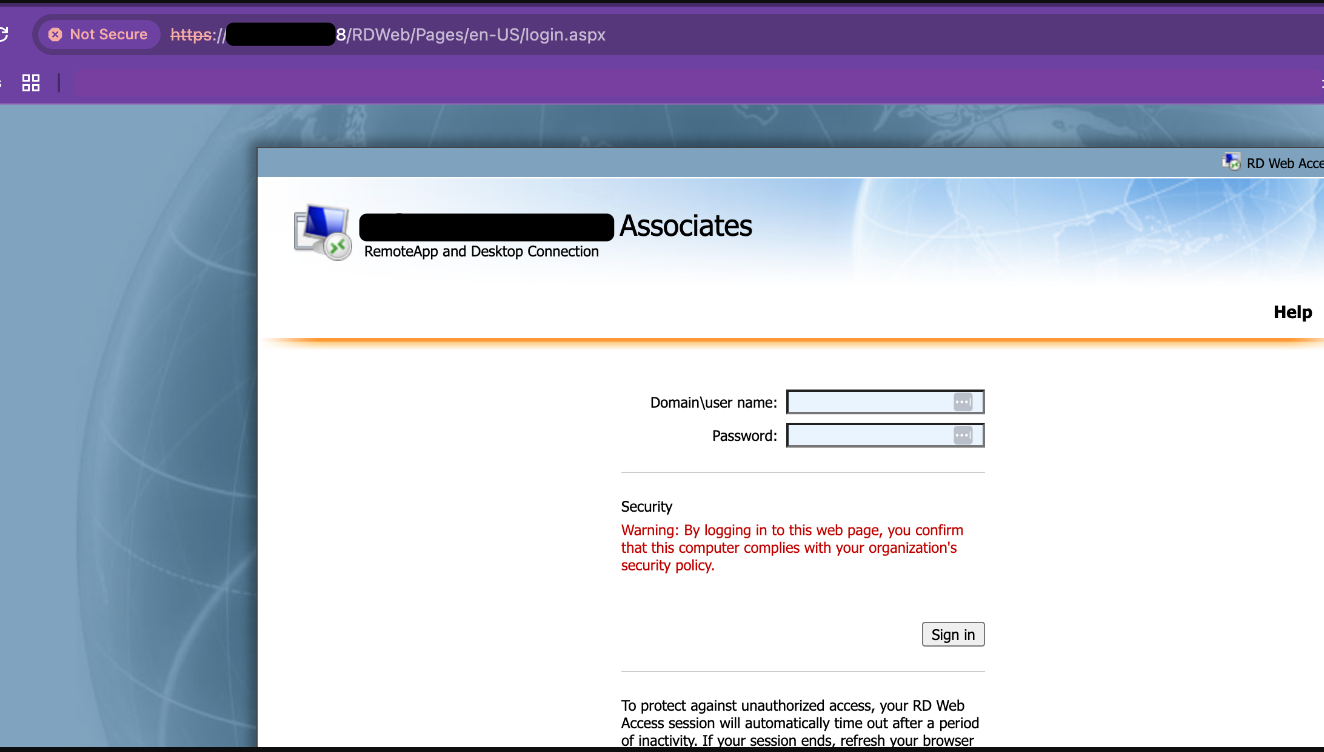
In this blog's case, the adversary gained initial access via a public-facing RD-Web instance. It was discovered that this RD-Web instance had been subject to brute forcing, whereby multiple threat actors had taken advantage of the opportunity to gain entry to the network from the insecurity that RDP had brought to the perimeter.
RDP Web accessible from public internet
Figure 1: RDP Web accessible from public internet

Brute force is unsophisticated but does achieve results for threat actors. A brute force against a non-MFA’d authentication service will inevitably yield access. A user was eventually accessed from brute force via the following public IPv4s between October 28 and November 12: 

  • 217.138.216[.]60
  • 23.158.40[.]185
  • 147.135.112[.]230
  • 31.220.5[.]23
  • 78.141.202[.]136
  • 147.45.79[.]193

Lateral Movement

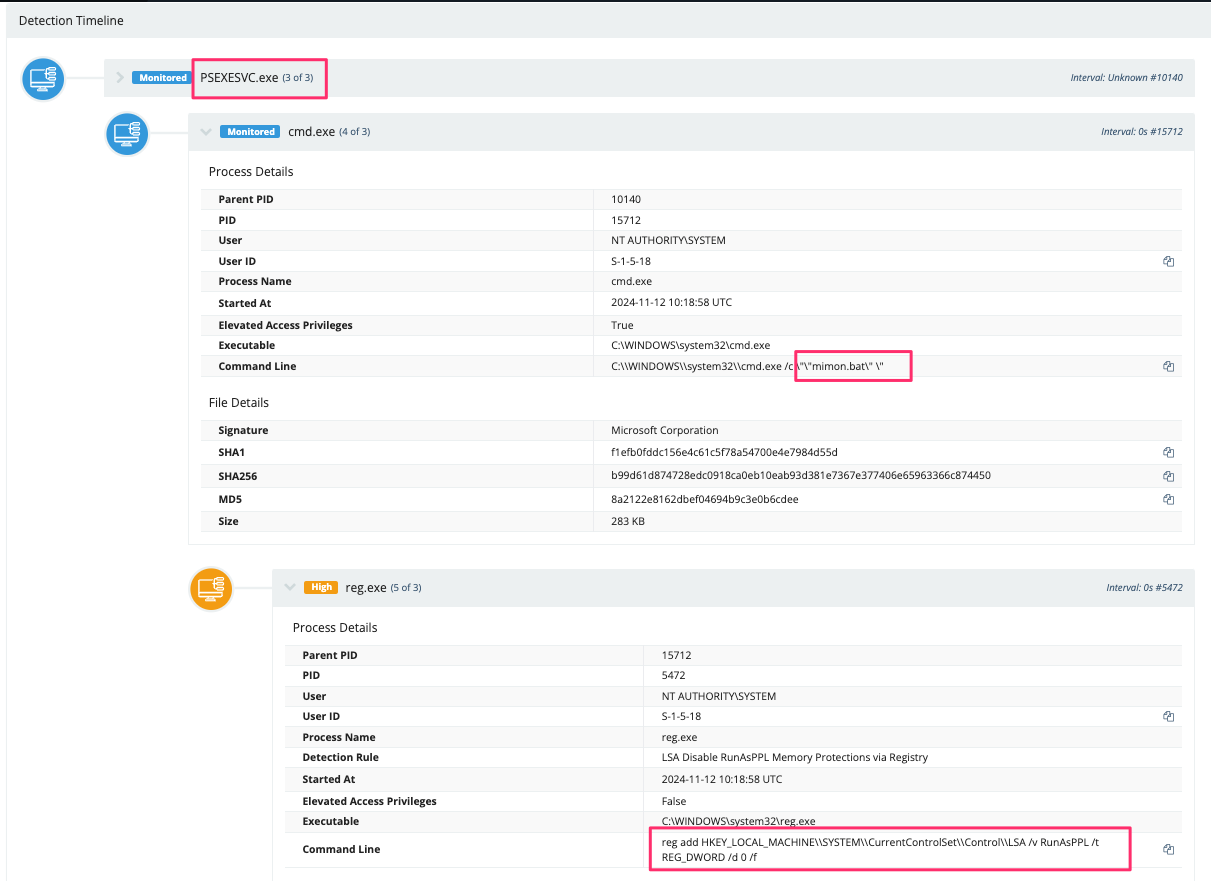
Threat actors typically don’t wish to reside on the beachhead machine but seek to understand more about the new terrain and pivot across it to higher-tiered machines. The threat actor leveraged the legitimate tool PsExec to begin to not just move laterally but also execute commands across multiple machines at one time. 
Progression of attack as seen on multiple hosts within organization
Figure 2: Progression of attack as seen on multiple hosts within organization

Via PsExec, the compromised user ran two batch files from the remote PsExec session. The batch files completed the following actions:

openrdp.bat facilitated RDP connections to hosts by manipulating both the registry and the firewall rules. Its contents are revealed below:

Loading Gist...

mimon.bat worked to ensure the successful installation of the MeshAgent, remove LSA protection, and enable WDigest to facilitate the storage of credentials in plaintext. The contents of this file are:

Loading Gist...

Huntress has shared much about how to investigate PsExec, but an under-appreciated feature of PsExec is its ability to run commands across all machines in the network, at once, providing the compromised user has the appropriate privileges.

> Computer | …..if you specify a wildcard (\\*), PsExec runs the command on all computers in the current domain.

Threat actors, like the one in this case, can, therefore, have a huge negative cascading impact on the environment.

Renamed MeshAgent 

Following initial access via successful brute force, the threat actor escalated their privileges and gained control of an Administrator account.

Via their PsExec activity, they proceeded to push the installation of a renamed malicious MeshAgent instance: "C:\Program Files\Windows NT\nvspbind\nvspbind.exe"—the name of a virtualization binary (but more on this shortly).

MeshAgent installed as renamed binary
Figure 3: MeshAgent installed as renamed binary ‘C:\Program Files\Windows NT\nvspbind\nvspbind.exe’

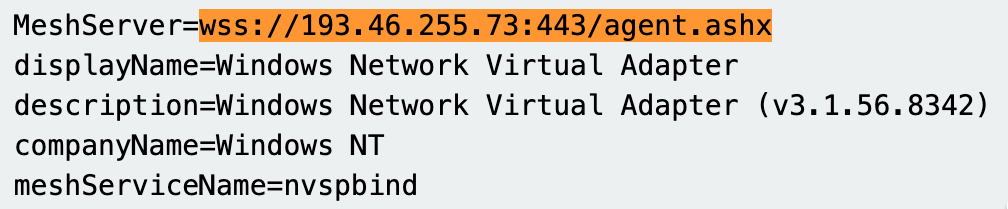
A quick analysis of the binary showed the MeshAgent instance reached out to the following domain: wss[://]193.46.255[.]73:443/agent[.]ashx
Simple binary analysis showing Mesh Server
Figure 4: Simple binary analysis showing Mesh Server

Pivoting on this investigative thread, an online search of this IP showed it had the associated hostname WIN-O5926T00T93. Not only did this machine hostname not match the naming convention of the legitimate machines in the Active Directory, but it's a telling static indicator that can be tracked—Huntress has found that threat actors rarely change their machine names, offering high-fidelity detection opportunities for defenders when these machines successfully authenticate.

Moreover, honing in on the call-back address of the MeshAgent, it fronted itself as a "Windows Network Virtual Adapter (v3.1.56.8342) - Login ," which was, to put it bluntly, weird.
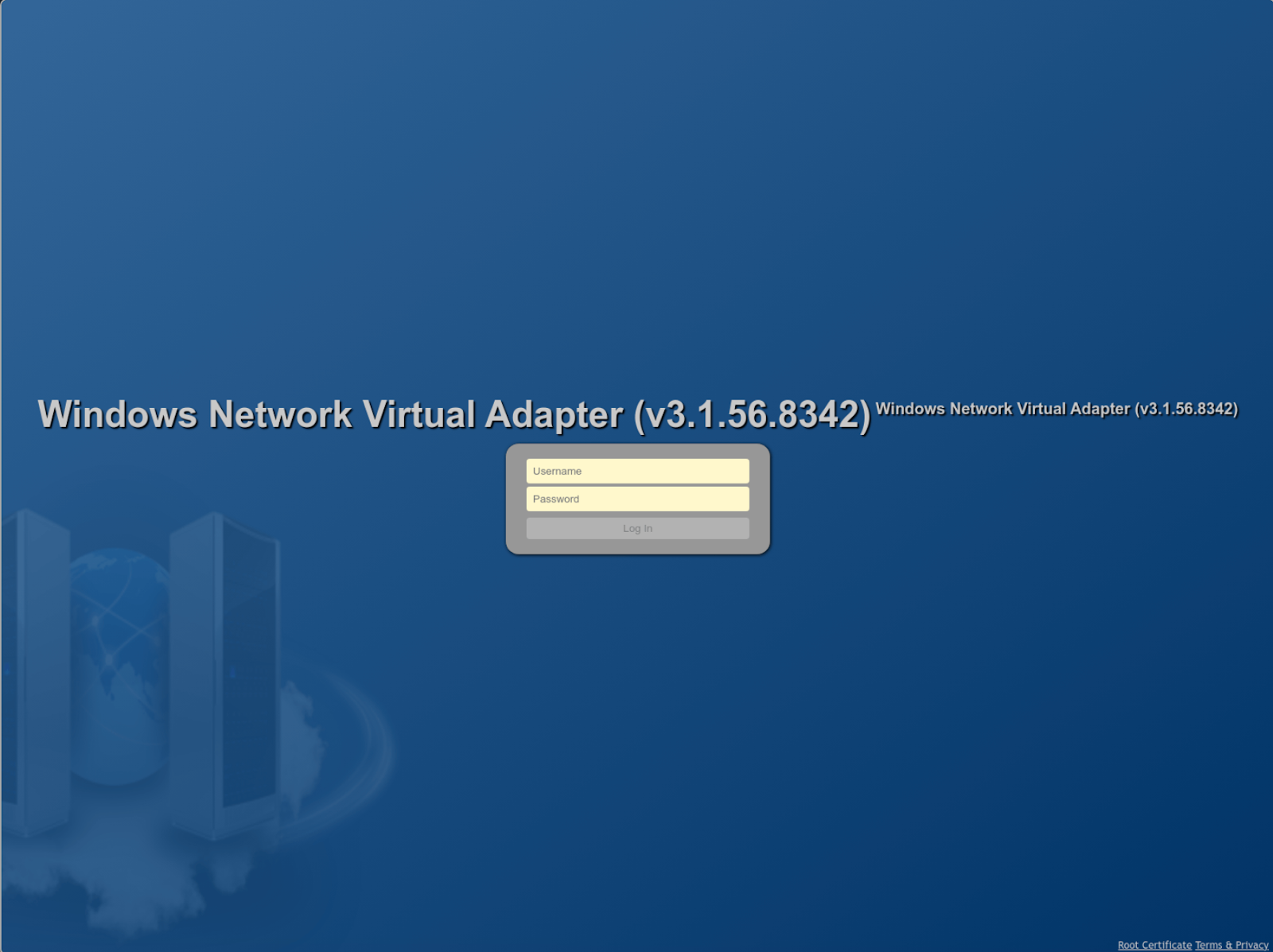
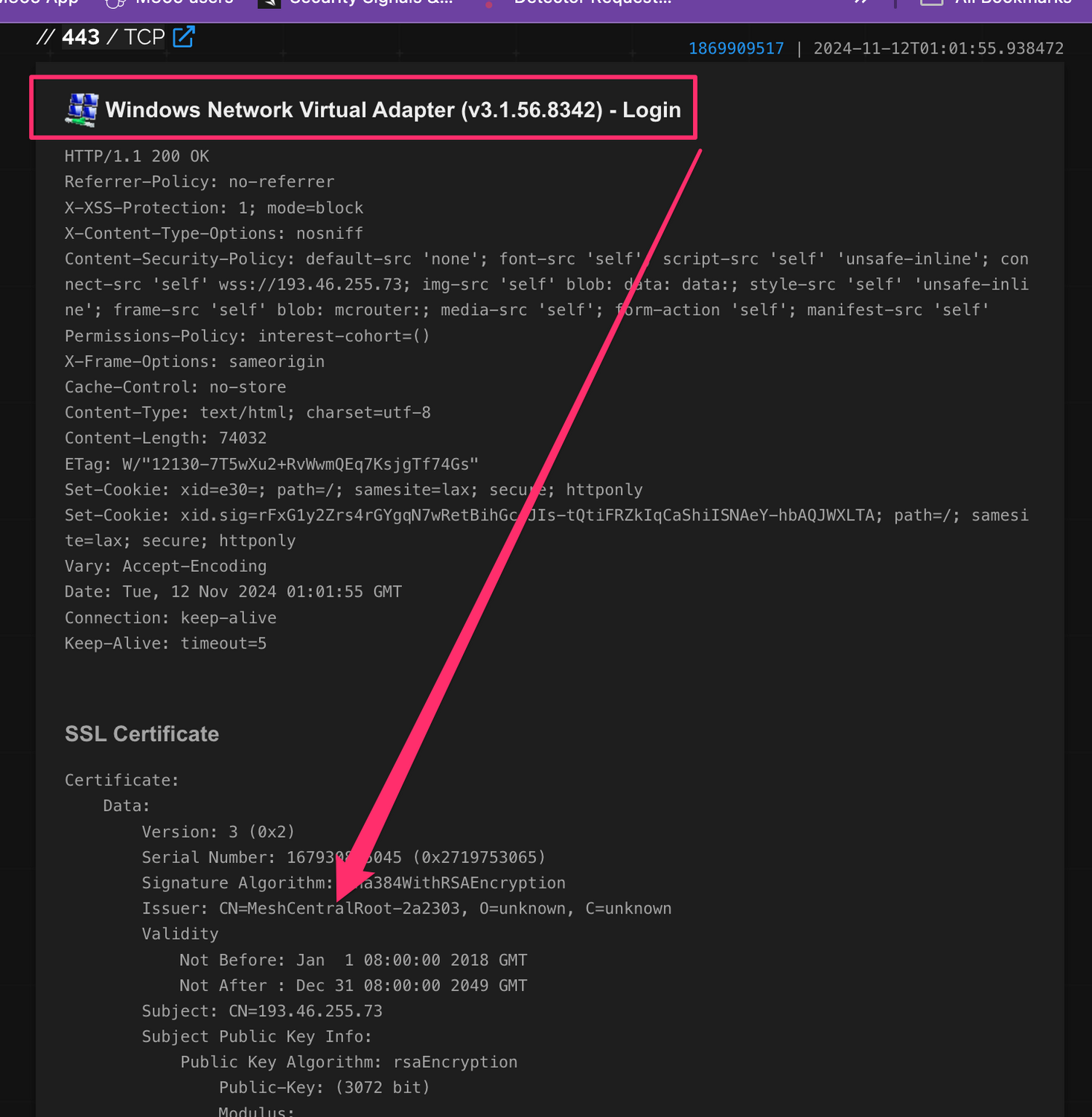
Login for masquerading MeshAgent Remote Access Server 
Figures 5 and 6: Login for masquerading MeshAgent Remote Access Server 

To confirm, Windows Network Virtual Adapter is a technology dedicated to host-based virtualization and has nothing to do with malicious activity. What the threat actor has attempted to do here is fly under the radar by renaming their client-side MeshAgent after a virtualization binary (“C:\Program Files\Windows NT\nvspbind\nvspbind.exe”) and the server side as “Windows Network Virtual Adapter (v3.1.56.8342) - Login,” when it is, in fact, just the login for MeshAgent. 

This is an unrefined but effective defense evasion for their remote access. They’re likely able to suppress suspicion due to the “consistency” in client/server naming schemas. 

The intrusion was wrapped up, and the partner was informed of all findings. But the Huntress SOC did not take the findings to full satisfaction—could this threat actor have deployed similar activity elsewhere, in a completely different network?

Hunting Down Tradecraft

Threat hunting is the art of specifically querying a verbose set of telemetries with specific security questions until the investigator is satisfied. The aims for threat hunting are myriad, but the goal for the SOC at this time was to identify if this threat actor had compromised any other environments with similar tradecraft.

After the Huntress SOC neutralized and concluded the above intrusion, a retroactive analysis of all Huntress data was conducted for the specific MeshAgent/Nvspbind tradecraft. One result returned:
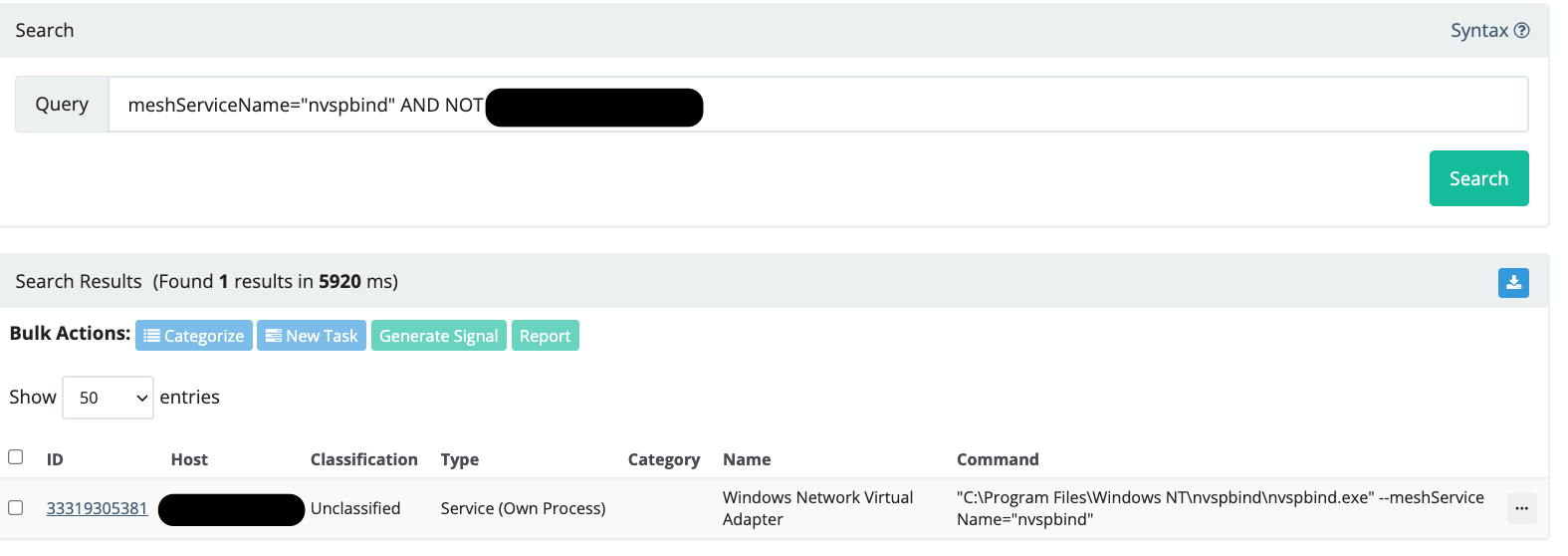
Persistence identified in Huntress Infrastructure 
Figure 7: Persistence identified in Huntress infrastructure 

This case was known to us—the first alert was a week prior to the investigation above. The Huntress SOC had responded to a Defender alert for credential dumping, which blocked “avrestore.exe” and “ARest1.exe.” These binaries were determined not to be mimikatz but, in fact, part of a previously documented tool kit for brute force to aid and facilitate lateral movement.

Persistence identified in Huntress Infrastructure 
Figure 8: Persistence identified in Huntress infrastructure 

Now, a week later, our retrospective threat hunt had uncovered a final persistent artifact of the threat actor’s operation—the MeshAgent/Nvspbind remote connection. Moreover, for this additional case, the root cause was also an RDP brute force, AS WELL AS the threat actor using WDigest again for credential access, suggesting this threat actor is consistent in their tradecraft and playbook.

Conclusions

The Huntress SOC enjoys ruining cyber criminals’ days. This threat actor has displayed a novel and amusing tradecraft for their remote access/command-and-control infrastructure, but one that can nonetheless be tracked and detected for the benefit of the information security community.

The cases shared here highlight the importance for security investigators to create and commit to continuous feedback loops between iterations of detection and hunting. This ensures that threat actors are given no quarter or reprieve for any insidious persistence and backdoors they think they may peacefully enjoy. 

For defenders of networks, the cases here have the following lessons learned we can recommend: 

  • Continuously review and harden the external perimeter, removing authentication services—like RDP—from the public internet where possible.
  • Enforce MFA where external services must be exposed, and ensure all MFA services actually work—third-party MFA for RDP is notoriously difficult to configure correctly.
  • Where possible, deploy allow-lists for software to ensure that threat actors and users alike cannot easily run whatever tools and toys they wish haphazardly. 

Indicators of Compromise

ItemDetails
ARestore.exe SHA256 hash:
fcea81909388611359bbaf41871300075e192a3246b9e1bebc5f3f0aaa2b2c9a
ARest1.exe SHA256 hash:
b629fe2363a23f7c0a6f40235ca25098321ba49bc397b36e2856a1ae76055c56
nvspbind.exe SHA256 hash:
fdf51eba1b48ed4180dfbb66d8e299794998252517597aff4a44162183f7dcd9

Command line:
C:\Program Files\Windows NT\nvspbind\nvspbind.exe" --meshServiceName="nvspbind
193.46.255[.]73Server for mesh
146.70.36[.]132 SurfShark VPN
217.138.216[.]60 SurfShark VPN
WIN-O5926T00T93 Adversary workstation

MITRE ATT&CK

TacticTechnique IDProcedureDescription
Initial AccessT1110Brute ForceMultiple public IPv4s were used for brute forcing an RD-Web instance to gain network access.
Lateral MovementT1569.002PsExecUsed PsExec to execute batch files (openrdp.bat and mimon.bat) for enabling RDP and installing malicious components.
PersistenceT1059.003Batch ScriptsBatch files modified registry keys and firewall rules, and enabled plaintext credential storage.
Defense EvasionT1036.005Renaming Malicious BinariesRenamed MeshAgent binary to mimic a legitimate virtual adapter binary (nvspbind.exe) and a server-side adapter name.
Credential AccessT1003.001WDigest Credential ExposureModified registry settings to enable WDigest and store credentials in plaintext.
Command and Control T1219Remote Access Tool (MeshAgent) MeshAgent was configured for communication with a malicious domain and masqueraded as legitimate software.

Credit to Faith Stratton and Josh Allman for the root-cause investigation and related findings from threat hunting.

Thanks to Austin Worline and Jamie Dumas for initial intrusion investigation. 

Special thanks to Anton Ovrutsky for additional findings and editing the blog.

Categories
Threat Analysis
Summarize this postClose Speech Bubble
ChatGPTClaudePerplexityGoogle AI

See Huntress in action

Our platform combines a suite of powerful managed detection and response tools for endpoints and Microsoft 365 identities, science-backed security awareness training, and the expertise of our 24/7 Security Operations Center (SOC).

Book a Demo
Share
Facebook iconTwitter X iconLinkedin iconDownload icon
Glitch effect

You Might Also Like

  • Credential Theft: From Initial Access to Lateral Movement

    What is credential theft? Learn how threat actors use phishing, brute force, and tools like Mimikatz or Registry hive dumps to gain initial access and move laterally.
  • Employee Monitoring and SimpleHelp Software Abused in Ransomware Operations

    Huntress uncovers ransomware operations abusing employee monitoring software and SimpleHelp RMM for persistence, and ransomware deployment.
  • Investigating New INC Ransom Group Activity

    The Huntress team investigated a ransomware attack of a new INC Ransom threat actor group. Here is the activity we observed.
  • Analyzing Initial Access Across Today's Business Environment

    Learn more about the initial access techniques observed by the Huntress SOC and Tactical Response teams! Gain valuable insights to help you protect your environment.
  • How to Detect and Eliminate Persistent Malware Before It Wreaks Havoc

    Stopping malware isn’t about catching one-off alerts. It’s about finding and shutting down the persistence that keeps them in your systems. Here’s how Huntress found, fought, and drop-kicked malware that others missed.
  • Bitter Pill: Third-Party Pharmaceutical Vendor Linked to Pharmacy and Health Clinic Cyberattack

    Huntress has uncovered a series of unauthorized access, revealing a threat actor using ScreenConnect to infiltrate multiple healthcare organizations.
  • Attacking MSSQL Servers, Pt. II

    The publication of the first blog post led a Huntress SOC analyst to identify and escalate a second, similar incident. A deeper investigation into the activity made it clear that the Huntress SOC had obviated several Trigona ransomware attacks, protecting customers from the impact of a ransomware infection.
  • Boring Isn’t Harmless: The Risks Behind Common Cyberattack Tradecraft

    Don’t underestimate basic attacker tradecraft tactics. Learn how common cybersecurity tradecraft succeeds and get practical tips from the Huntress SOC to shut it down.

Sign Up for Huntress Updates

Get insider access to Huntress tradecraft, killer events, and the freshest blog updates.
Privacy • Terms
By submitting this form, you accept our Terms of Service & Privacy Policy
Thank you! Your submission has been received!
Oops! Something went wrong while submitting the form.
Huntress Managed Security PlatformManaged EDRManaged EDR for macOSManaged EDR for LinuxManaged ITDRManaged SIEMManaged Security Awareness TrainingManaged ISPMManaged ESPMBook a Demo
PhishingComplianceBusiness Email CompromiseEducationFinanceHealthcareManufacturingState & Local Government
Managed Service ProvidersResellersIT & Security Teams24/7 SOCCase Studies
BlogResource CenterCybersecurity 101Upcoming EventsSupport Documentation
Our CompanyLeadershipNews & PressCareersContact Us
Huntress white logo

Protecting 215k+ customers like you with enterprise-grade protection.

Privacy PolicyCookie PolicyTerms of UseCookie Consent
Linkedin iconTwitter X iconYouTube iconInstagram icon
© 2025 Huntress All Rights Reserved.

Join the Hunt

Get insider access to Huntress tradecraft, killer events, and the freshest blog updates.

By submitting this form, you accept our Terms of Service & Privacy Policy