





Don’t let overlooked obligations become incidents. Learn how.
Utility navigation bar redirect icon
Portal LoginSupportContact
Search
Close search
Huntress Logo in Teal
  • Platform Overview
    Managed EDR

    Get full endpoint visibility, detection, and response.

    Managed EDR

    Get full endpoint visibility, detection, and response.

    Managed ITDR

    Protect your Microsoft 365 identities and email environments.

    Managed ITDR

    Protect your Microsoft 365 identities and email environments.

    Managed SIEM

    Managed threat response and robust compliance support at a predictable price.

    Managed SIEM

    Managed threat response and robust compliance support at a predictable price.

    Managed Security Awareness Training

    Empower your teams with science-backed security awareness training.

    Managed Security Awareness Training

    Empower your teams with science-backed security awareness training.

    Managed ISPM

    Continuous Microsoft 365 and identity hardening, managed and enforced by Huntress experts.

    Managed ISPM

    Continuous Microsoft 365 and identity hardening, managed and enforced by Huntress experts.

    Managed ESPM

    Proactively secure endpoints against attacks.

    Managed ESPM

    Proactively secure endpoints against attacks.

    Integrations
    Integrations
    Support Documentation
    Support Documentation
    See Huntress in Action

    Quickly deploy and manage real-time protection for endpoints, email, and employees - all from a single dashboard.

    Huntress Cybersecurity
    See Huntress in Action

    Quickly deploy and manage real-time protection for endpoints, email, and employees - all from a single dashboard.

    Huntress Cybersecurity
  • Threats We Stop
    Phishing
    Phishing
    Business Email Compromise
    Business Email Compromise
    Ransomware
    Ransomware
    Infostealers
    Infostealers
    View Allright arrowView Allright arrow
    Industries We Serve
    Education
    Education
    Financial Services
    Financial Services
    State and Local Government
    State and Local Government
    Healthcare
    Healthcare
    Law Firms
    Law Firms
    Manufacturing
    Manufacturing
    Utilities
    Utilities
    View Allright arrowView Allright arrow
    Tailored Solutions
    MSPs
    MSPs
    Resellers
    Resellers
    SMBs
    SMBs
    Compliance
    Compliance
    What Gets Overlooked Gets Exploited

    Most days, nothing happens. But one day, something will.

    Huntress Cybersecurity
    Cybercriminals Have Evolved

    Get the intel on today’s cybercriminal groups and learn how to protect yourself.

    Huntress Cybersecurity
  • Pricing
  • Community Series
    The Product Lab

    Shape the next big thing in cybersecurity together.

    The Product Lab

    Shape the next big thing in cybersecurity together.

    Fireside Chat

    Real people. Real perspectives. Better conversations.

    Fireside Chat

    Real people. Real perspectives. Better conversations.

    Tradecraft Tuesday

    No products, no pitches – just tradecraft.

    Tradecraft Tuesday

    No products, no pitches – just tradecraft.

    _declassified

    Exposing hidden truths in the world of cybersecurity.

    _declassified

    Exposing hidden truths in the world of cybersecurity.

    Resources
    Upcoming Events
    Upcoming Events
    Ebooks
    Ebooks
    On-Demand Webinars
    On-Demand Webinars
    Videos
    Videos
    Whitepapers
    Whitepapers
    Datasheets
    Datasheets
    Cybersecurity Education
    Cybersecurity 101
    Cybersecurity 101
    Cybersecurity Guides
    Cybersecurity Guides
    Threat Library
    Threat Library
    Real Tradecraft, Real Results
    Real Tradecraft, Real Results
    2026 Cyber Threat Report
    2026 Cyber Threat Report
    The Huntress Blog
    Huntress Lands on the Microsoft Marketplace
    Huntress Cybersecurity
    Huntress Lands on the Microsoft Marketplace
    Huntress Cybersecurity
    How Huntress & DEFCERT Are Streamlining CMMC Assessment Prep
    Huntress Cybersecurity
    How Huntress & DEFCERT Are Streamlining CMMC Assessment Prep
    Huntress Cybersecurity
    Live Hacking Into Microsoft 365 with Kyle Hanslovan
    Huntress Cybersecurity
    Live Hacking Into Microsoft 365 with Kyle Hanslovan
    Huntress Cybersecurity
  • Why Huntress

    Go beyond AI in the fight against today’s hackers with Huntress Managed EDR purpose-built for your needs

    Huntress Cybersecurity
    Why Huntress

    Go beyond AI in the fight against today’s hackers with Huntress Managed EDR purpose-built for your needs

    Huntress Cybersecurity
    The Huntress SOC

    24/7 Security Operations Center

    The Huntress SOC

    24/7 Security Operations Center

    Reviews

    Why businesses of all sizes trust Huntress to defend their assets

    Reviews

    Why businesses of all sizes trust Huntress to defend their assets

    Case Studies

    Learn directly from our partners how Huntress has helped them

    Case Studies

    Learn directly from our partners how Huntress has helped them

    Community

    Get in touch with the Huntress Community team

    Community

    Get in touch with the Huntress Community team

    Compare Huntress
    Bitdefender
    Bitdefender
    Blackpoint
    Blackpoint
    Breach Secure Now!
    Breach Secure Now!
    Crowdstrike
    Crowdstrike
    Datto
    Datto
    SentinelOne
    SentinelOne
    Sophos
    Sophos
    Compare Allright arrowCompare Allright arrow
  • HUNTRESS HUB

    Login to access top-notch marketing resources, tools, and training.

    Huntress Cybersecurity
    HUNTRESS HUB

    Login to access top-notch marketing resources, tools, and training.

    Huntress Cybersecurity
    Partners
    MSPs

    Join our partner community to deliver expert-led managed security.

    MSPs

    Join our partner community to deliver expert-led managed security.

    Resellers

    Partner program designed to grow your cybersecurity business.

    Resellers

    Partner program designed to grow your cybersecurity business.

    Tech Alliances

    Driving innovation through global technology Partnerships

    Tech Alliances

    Driving innovation through global technology Partnerships

    Microsoft Partnership

    A Level-Up for Your Business Security

    Microsoft Partnership

    A Level-Up for Your Business Security

  • Press Release
    Huntress Announces Collaboration with Microsoft to Strengthen Cybersecurity for Businesses of All Sizes
    Huntress Cybersecurity
    Press Release
    Huntress Announces Collaboration with Microsoft to Strengthen Cybersecurity for Businesses of All Sizes
    Huntress Cybersecurity
    Our Story

    We're on a mission to shatter the barriers to enterprise-level security.

    Our Story

    We're on a mission to shatter the barriers to enterprise-level security.

    Newsroom

    Explore press releases, news articles, media interviews and more.

    Newsroom

    Explore press releases, news articles, media interviews and more.

    Meet the Team

    Founded by former NSA Cyber Operators. Backed by security researchers.

    Meet the Team

    Founded by former NSA Cyber Operators. Backed by security researchers.

    Careers

    Ready to shake up the cybersecurity world? Join the hunt.

    Careers

    Ready to shake up the cybersecurity world? Join the hunt.

    Awards
    Awards
    Contact Us
    Contact Us
  • Portal Login
  • Support
  • Contact
  • Search
  • Get a Demo
  • Start for Free
Portal LoginSupportContact
Search
Close search
Get a Demo
Start for Free
HomeBlog
Cleartext Shenanigans: Gifting User Passwords to Adversaries With NPPSPY
Published:
August 16, 2022

Cleartext Shenanigans: Gifting User Passwords to Adversaries With NPPSPY

By:
Dray Agha
Share icon
Glitch effectGlitch effectGlitch effect

While investigating an intrusion, Huntress stumbled on something rather fascinating to do with adversarial credential gathering.

Threat actors are often retrospectively gathering credentials by dumping what’s already on the system (like Mimikatz). Some tools, like Responder, let the threat actor listen network-wide and pick up some hashes that are whizzing around the Active Directory. 

But it isn’t too common that we at Huntress see threat actors proactively manipulate a system not just to gather credentials, but to gather cleartext passwords*. Normally, we only see this proactive effort via UseLogonCredential registry manipulation.

And yet, while investigating a recent intrusion, we found an unusual technique to steal cleartext creds. 

A threat actor had gained access to a complex network, dwelled in dark corners of the environment, and then deployed Grzegorz Tworek's NPPSPY technique to ‘man in the middle’ the user logon process, and squirrel away the user’s name and password in an unassuming file. 

It seems that the community has documented this NPPSPY technique in theory, but so far it seems like no one has documented when they have encountered it maliciously deployed in the wild. 

In this article, let’s have a look at when the Huntress team encountered this technique IRL. 

What Does NPPSPY Do?

Before we go into the details of this tradecraft, I recorded a short video of how this technique works. The TLDR here: it’s possible to man-in-the-middle the login process and save a user’s password cleartext into a file on the file system:

I am simplifying the technique because I am a simpleton from Grzegorz’s notes [1, 2] and Microsoft documentation. Many have already written about this technique and incorporated it into security frameworks, like Atomic Red’s suite of tests, so I won’t dwell too much on the granularity of this explanation.

When you sit down to sign onto your machine and type in your password to authenticate, a bunch of different things are done on the back end with your credentials: hashing, checking, flying back and forth to a domain controller, etc.  

The conversation between Winlogon and Local Security Authority Subsystem Service (LSASS) is most relevant for our instance. Winlogon is both the graphical user interface that we use to put our credentials in, as well as the conversational partner with LSASS for letting you sign in. 

It’s more of a challenge to mess with LSASS to try and gather credentials, and so the NPPSPY technique takes the path of least resistance by focusing on Winlogon. 

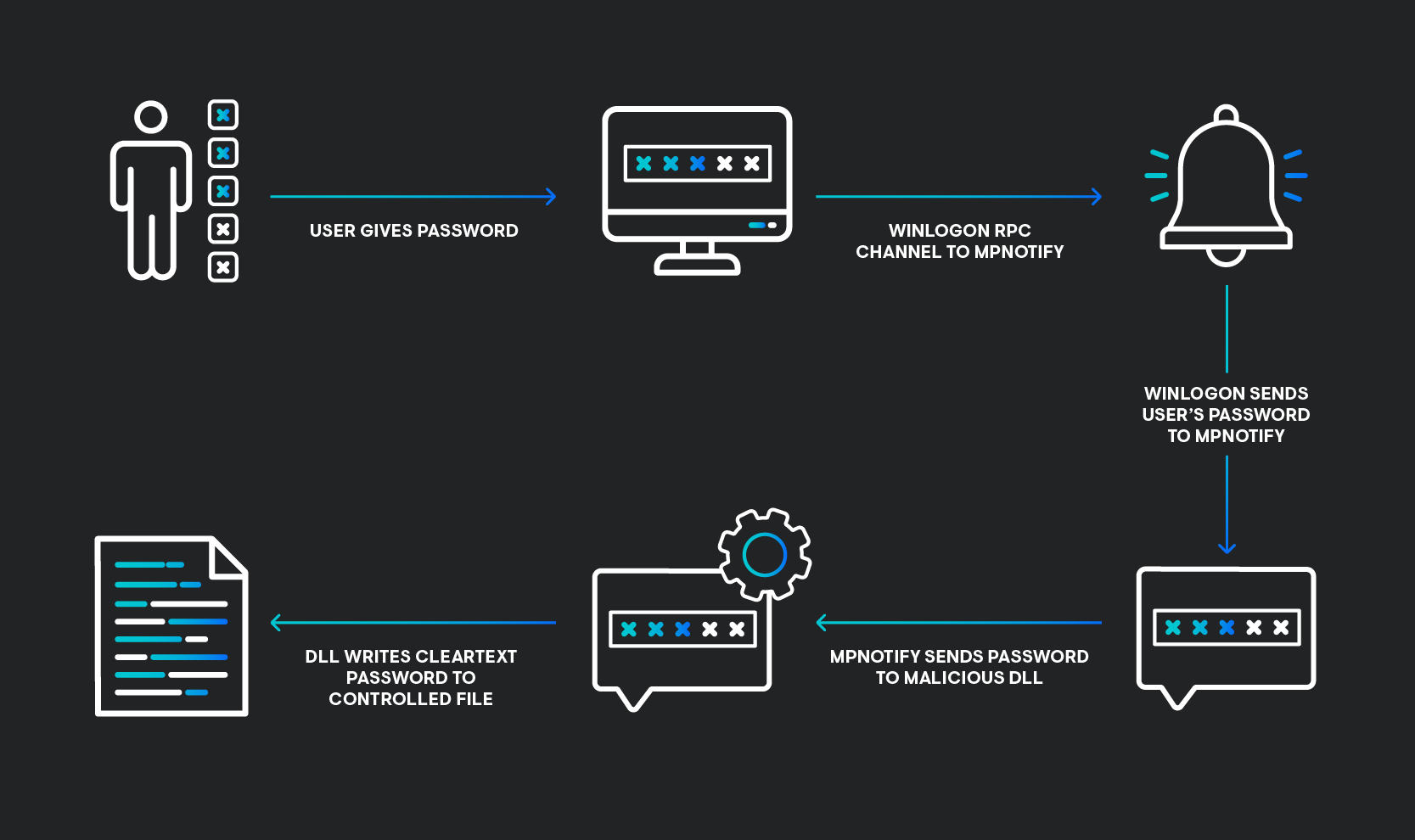
When you give your password to Winlogon, it opens up an (RPC) channel to a mpnotify.exe and sends it over the password. Mpnotify then goes and tells some DLLs what’s up with this credential. 

NPPSPY comes alive here. Mpnotify is maliciously told about a new adversarial network provider to consider. This network provider is attacker-controlled and comes with a backdoored DLL the adversary has created. This slippery DLL simply listens for this clear text credential exchange from winlogon down to mpnotify and then saves this clear text credential exchange. 
8.10.22_Blog_Graphic-01

What Did We Find in the Wild?

Let me take you back to the case.

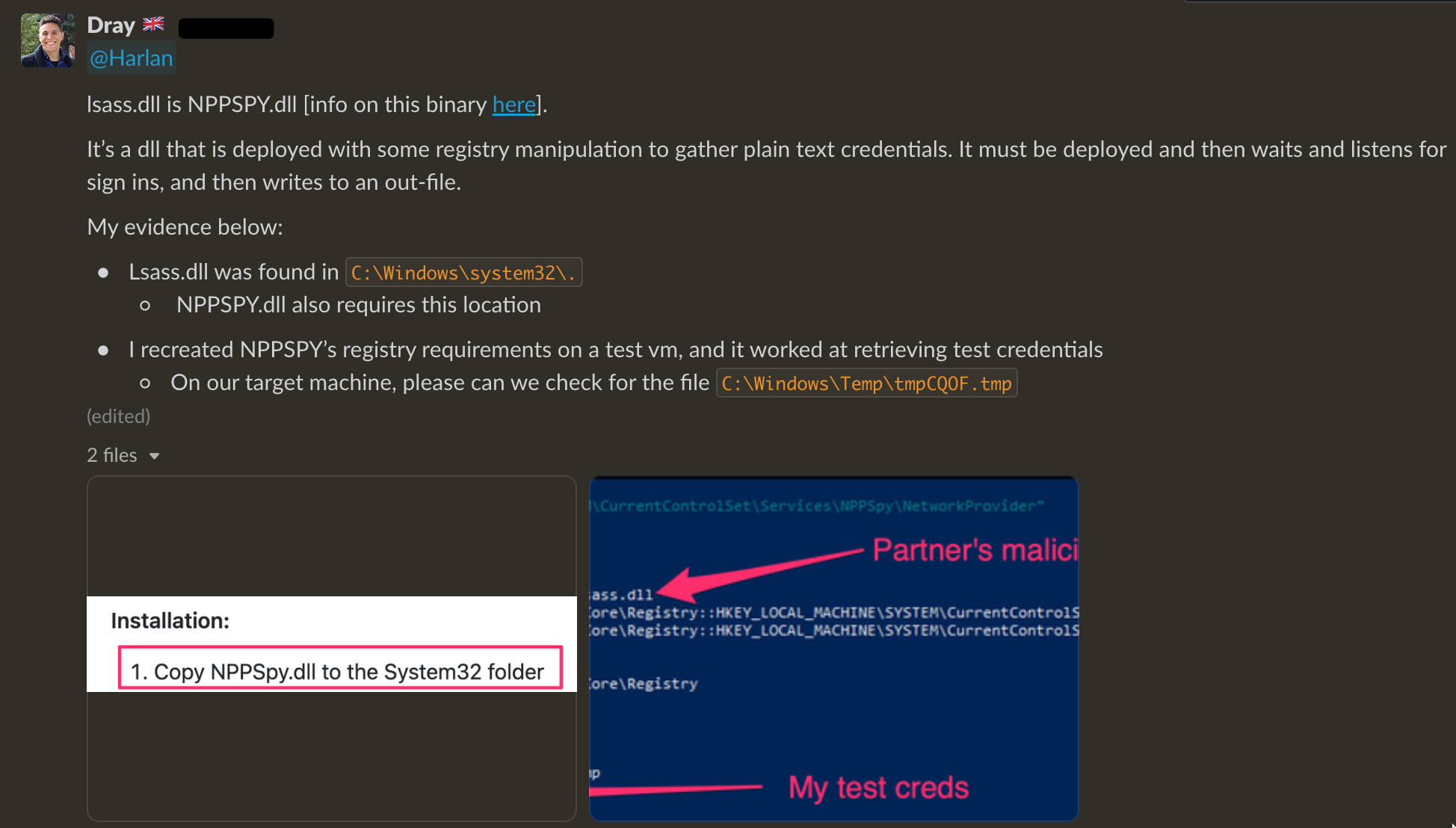
During this intrusion, the Godparents of DFIR, Jamie Levy and Harlan Carvey, used their forensic wizardry to point the team to find and give some attention to a ‘C:\Windows\System32\lsass.dll’. They had identified that this had been associated with a compromised account and advised us to go and determine what it was. 

Now, we’re all good noodles on the ThreatOps team, and if a Big Boss gives an order, you bet we’ll go get it DONE. We got the DLL, dissected it, hypothesized it was NPPSPY and then deployed it in our local lab to verify this theory. 
slack thread
testing locally

After having tested locally, we then looked at the compromised system. Very satisfyingly, we could account for the exact techniques the threat actor had leveraged. 

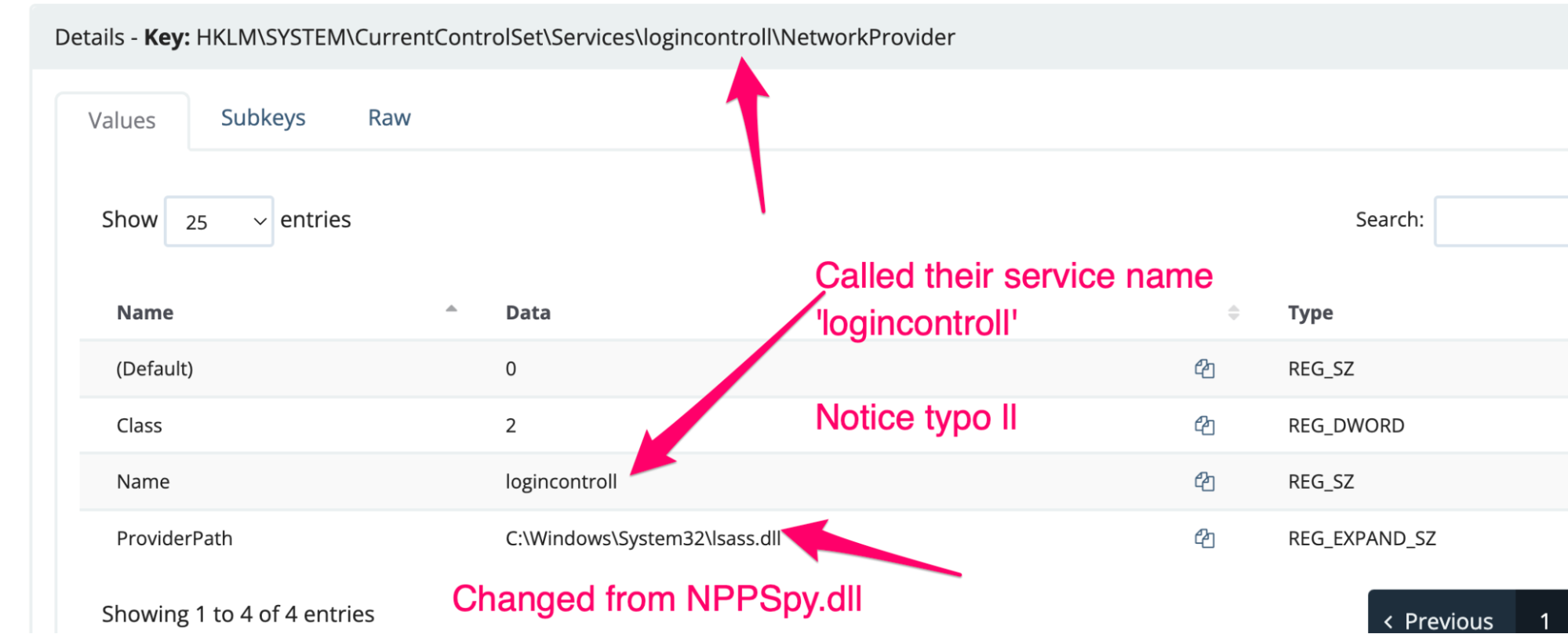
  • The network provider in this instance was named logincontroll (typo intentional)
  • It occupied HKLM\SYSTEM\CurrentControlSet\Control\NetworkProvider\Order and created value logincontrol
  • And then pointed logincontroll with the path C:\Windows\System32\lsass.dll at registry HKLM\SYSTEM\CurrentControlSet\Services\logincontroll\NetworkProvider

Below are screenshots from the compromised system:
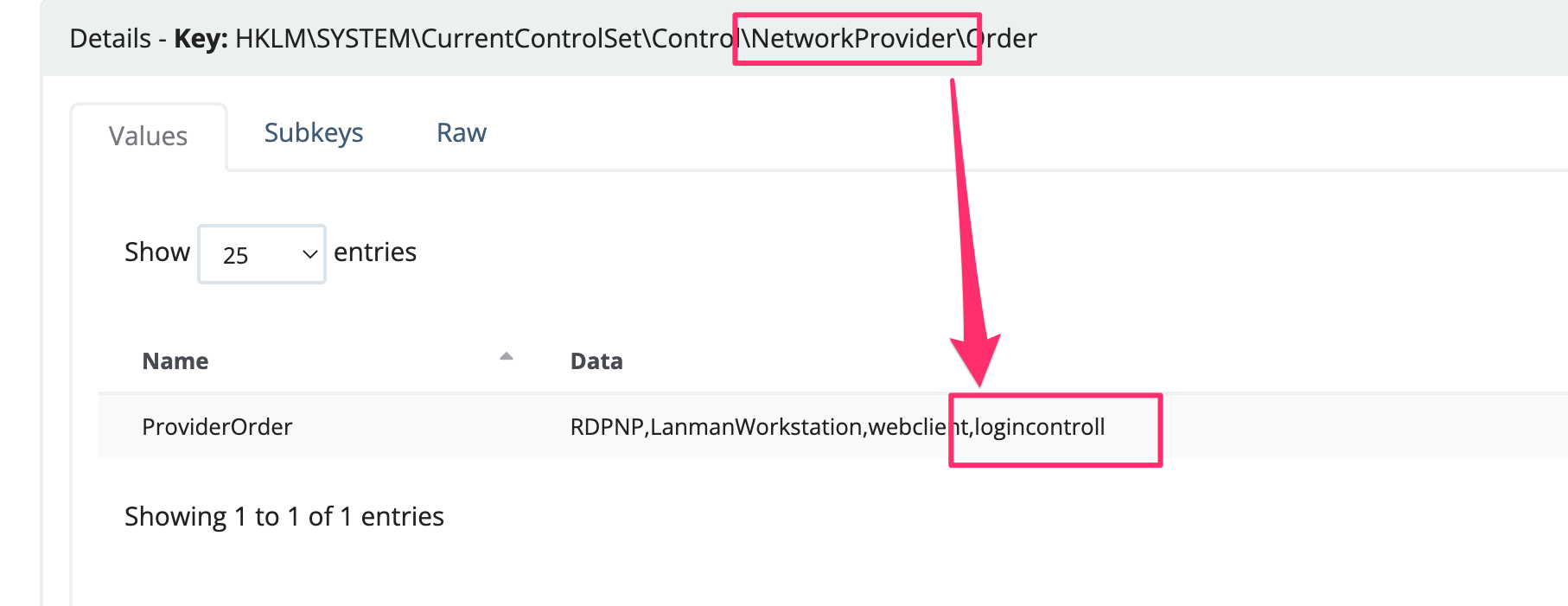
image8-1
image10

In our lab and then on the compromised host, we identified that C:\Windows\Temp\tmpCQOF.tmp was the hardcoded file that the threat actor had designated to listen and record the credentials as Username -> Password:
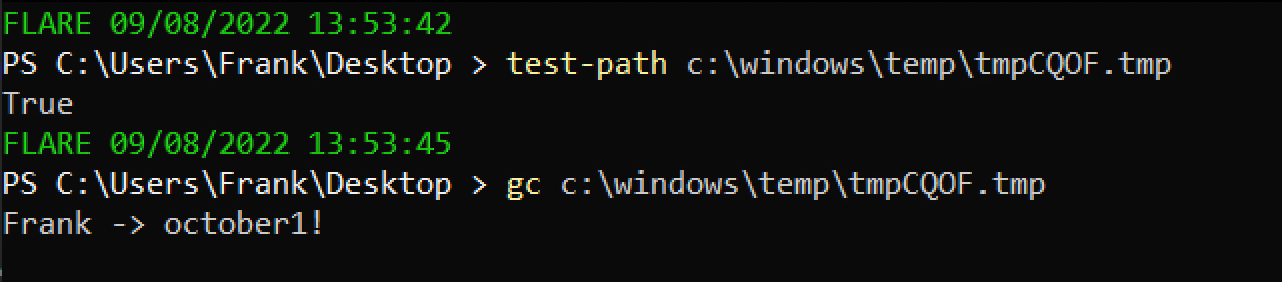
image11

Now I can’t show you what was in that file on the compromised system—only what was re-created in our testing environment. But trust me, seeing a tonne of cleartext usernames and passwords was WILD. 

Outstanding Oddities

You know, something always interesting with investigations is that even when you reach one conclusion, there is always one thread out of place, waiting for you to pull, unravel and get further lost in the sauce.

We identified this tradecraft on a compromised Exchange server.

Remember C:\Windows\Temp\tmpCQOF.tmp, the file that kept a record of the cleartext creds? Evidence suggested that email addresses and their corresponding clear text passwords made it into the dump. 

Homer

This was me upon that realization. Now, keeping in mind that I am a mere mindless marmoset, I get easily confused. How did backdooring the local login process end up rounding up the email addresses and passwords for users authenticating to gather their emails, from this Exchange machine?

To try and wrap my head around what the evidence was showing, we sought counsel with Huntress’ Researcher Tech Lead and Leader of the Council of the Wise, Dave Kleinatland 🧙. 

Dave agreed it was odd, but suggested

Exchange-related authentications CAN be swept up in NPPSPY’s net for catching cleartext credentials in transit… If you're capturing creds on an Exchange box, you're doing well.

This suggests that for NPPSPY, there are under-documented benefits to targeting specific servers in an Active Directory. We saw the evidence firsthand that hitting an Exchange box also gathered the clear text creds for users just trying to access their emails.

Investigating and Defending

A worry we had when putting this blog together is that by shining the spotlight on an interesting, lesser deployed offensive security technique, Huntress would be partially responsible for a spike in near future usage.

As such, we wanted to spend some time on how defenders can investigate and detect this. 

For my red team colleagues, some places advise how to deploy NPPSPY. The default DLL that Grzegorz kindly provides will get flagged by Defender, but Grzegorz’s kindness knows no bounds, and he provides the C code to compile it yourself.

Checking Live Systems

Grzegorz provides this script to look at the Network Providers and their associated DLL file paths.  

From a registry point of view, it’s a ‘service’, but it is not really a service and thus cannot be detected as such. In the screenshot below, you can see NPPSPY comparison to the other legitimate ones ‘logincontroll’ is relatively light on signatures, version numbers, or descriptions. But it is considered trivial for threat actors to add many of these, so don’t rely on the absence of these for detection. 
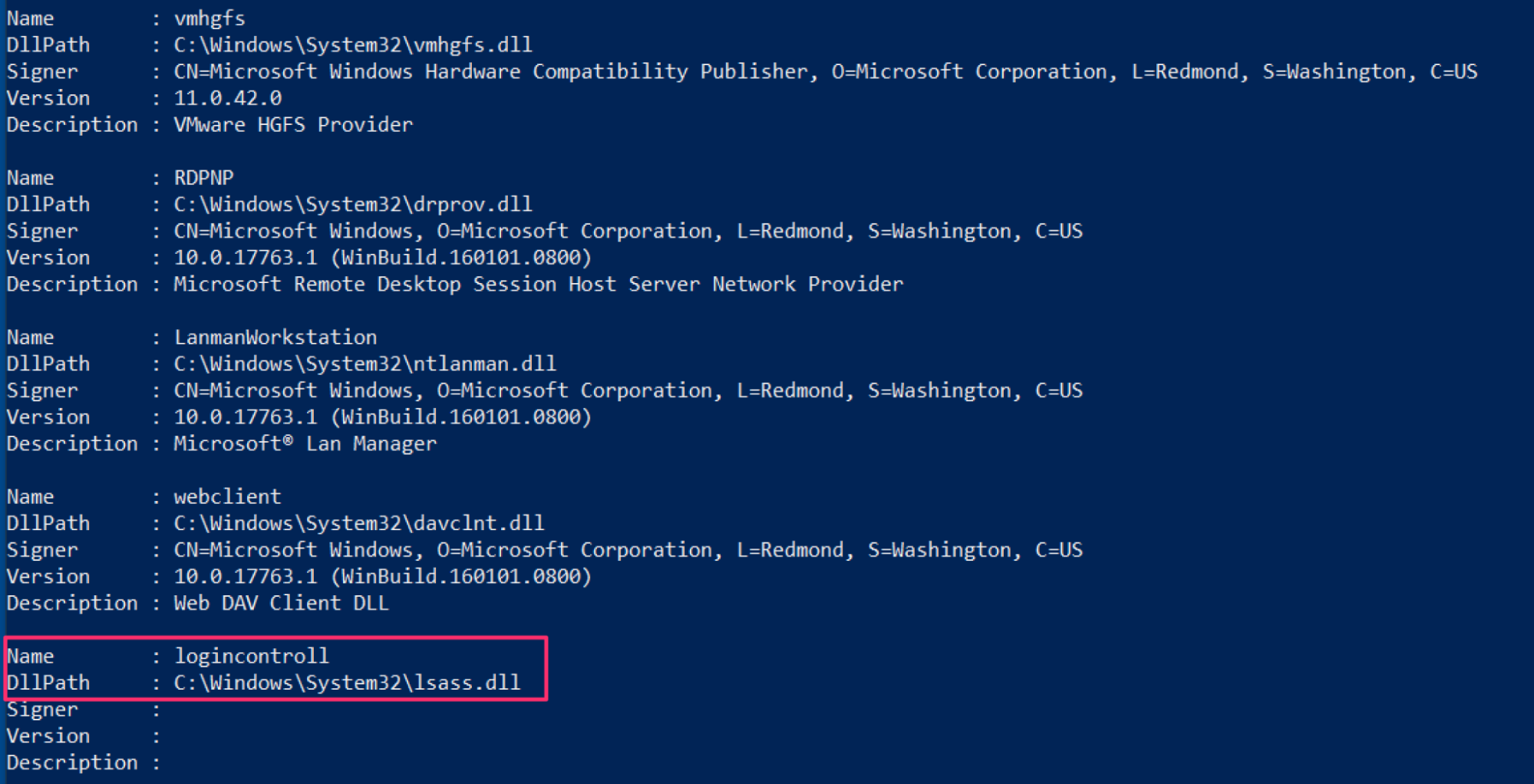
image7

Forensics

Like a lot of things in infosec, Harlan seems to have already had all bases covered, no matter how novel the technique. 

By leveraging the services plugin for RegRipper v3.0, we will see the very suspicious service name we have already identified with our threat actor’s implementation of NPPSPY.  
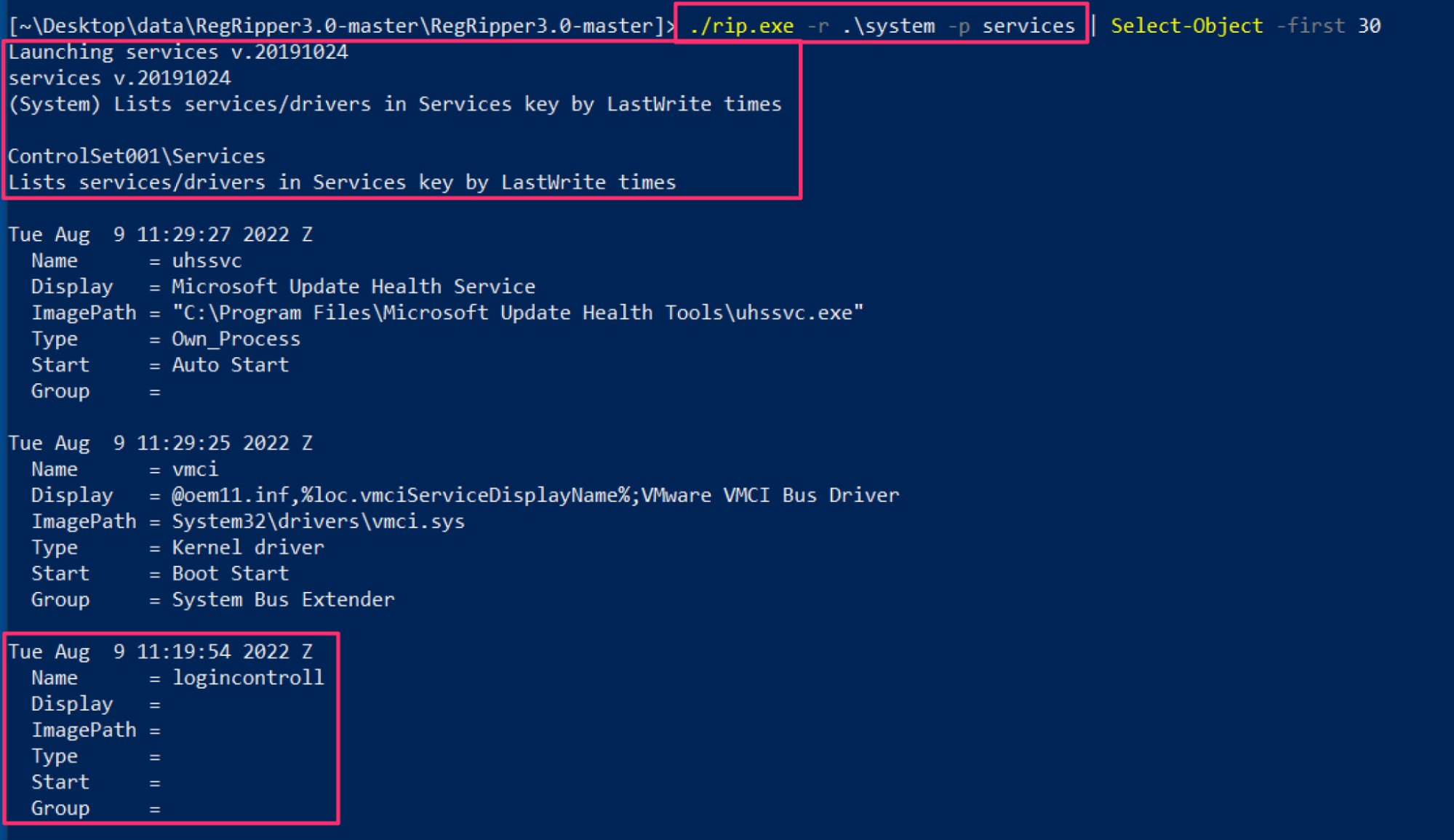
image6

Monitoring and Detecting

The file name that records the cleartext credentials is hardcoded from the source, and therefore we do not have detection opportunities here. 
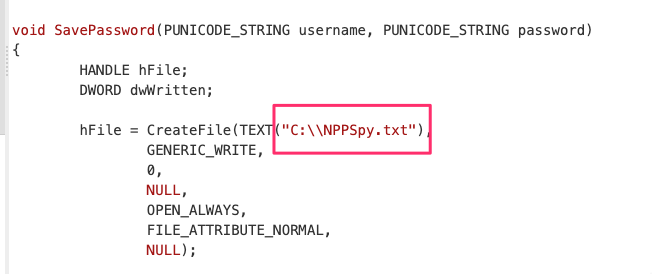
image2

Although the NPPSPY docs advise dropping the DLL in C:\windows\System32, you don’t have to. The example below demonstrates how an adversary can drop the required DLL in any directory, like C:\windows\temp. Therefore, we do not have detection opportunities here for any required directories. 
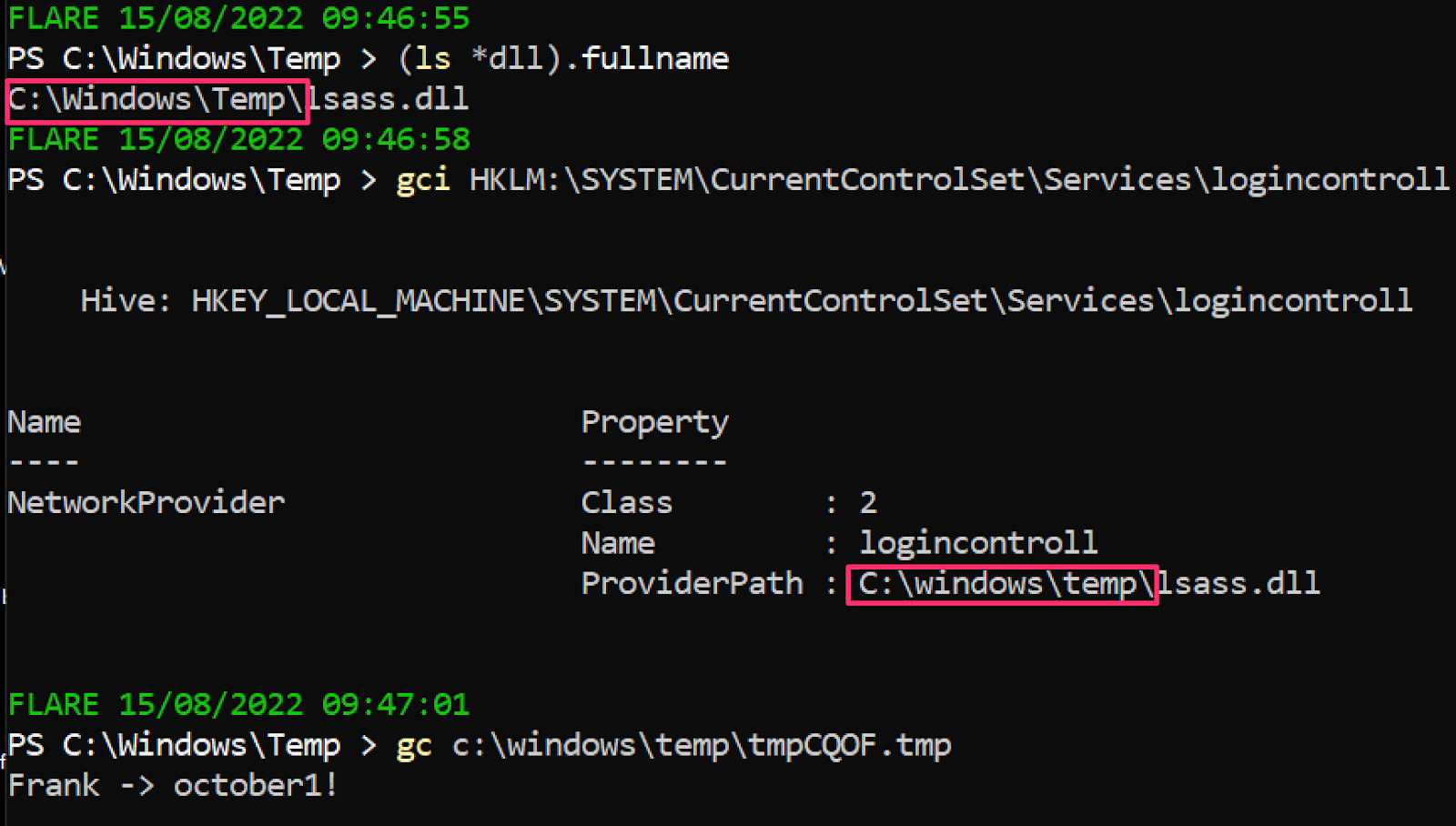
an adversary can drop the required DLL in any directory

This NPPSPY technique is noisy. And detecting this is possible with various security monitoring tools that monitor the processes and commands being run on a machine. You could use Sysmon as a free option. At Huntress, we have our Process Insights listener that makes parent-child process lineage easy to follow.

There are several detection opportunities for NPPSPY, as adversaries have to

  • Be a privileged user
  • Create and manipulate a number of registry entries 
  • Bring a DLL on disk
  • And then write clear text creds to a file somewhere

Elastic has a rule query for this kind of network provider manipulation. They assign it a severity medium... personally, I’d assign this kind of activity to be a super nuclear critical... but that’s just me. 

IOCs and Behavior

  • OS Credential Dumping - ATT&CK T1003
  • Values under HKLM\SYSTEM\CurrentControlSet\Control\NetworkProvider\Order
  • For our case: logincontroll
  • Unexplained entries in HKLM\SYSTEM\CurrentControlSet\Services\<here>\NetworkProvider
  • For our case: logincontroll
  • Unexplained DLLS in folders (very difficult to detect)
  • For our case: C:\windows\system32\lsass.dll
  • Files being continually written too (essentially impossible to detect this IMO)
  • For our case: C:\Windows\Temp\tmpCQOF.tmp

Remediating

To remediate and eradicate this wickedness, we tested furiously with our virtual machine snapshots.

  • Deleting only C:\windows\system32\<attacker.dll> stops the credential file being written to
  • Deleting only the key HKLM:\SYSTEM\CurrentControlSet\Services\<Attacker provider name>\NetworkProvider stops the credential file being written to

Therefore deleting both the attacker-controlled DLL and the registry entry will stop the cleartext credential gathering activity for sure. 

Below is an extract of the report the partner received from us, which allowed one-click automatic remediations to undo the ensnarement NPPSPY had placed the machine under.
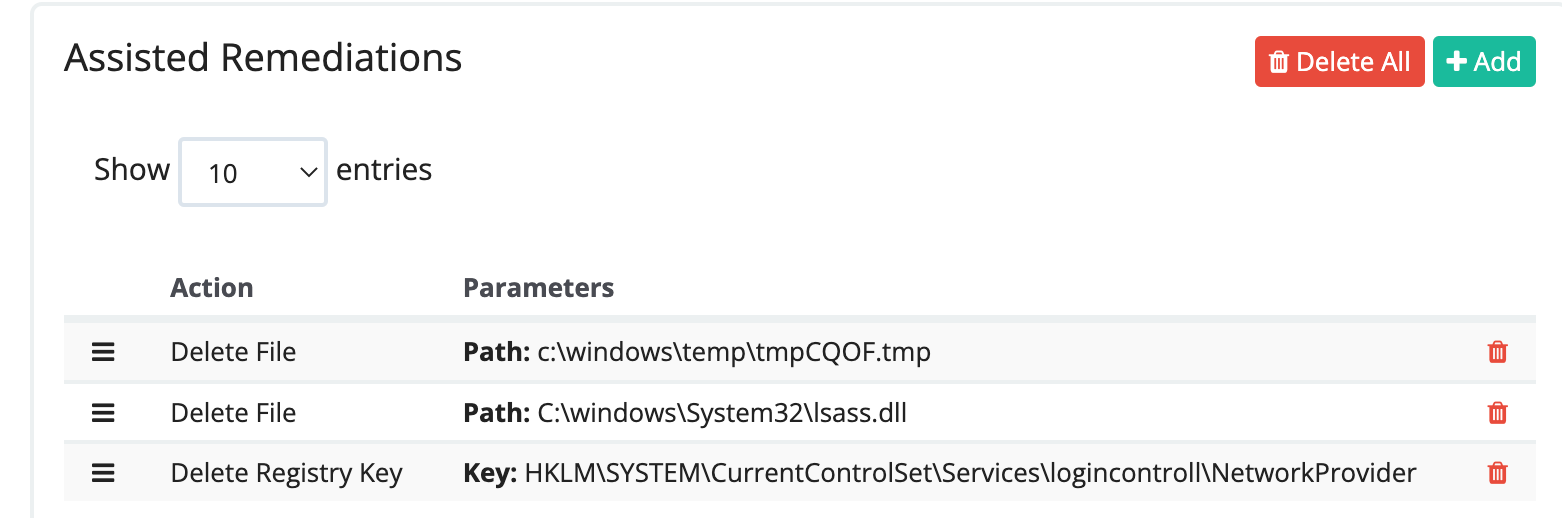
assisted remediations

So, the Bad Actors Won?

Some may point the blame at security researchers in these instances. It’s easy to assume that because they create techniques and share proofs of concept, that they are the root of evil in the cybercriminal ecosystem.

This couldn’t be further from the truth. The problem is not offensive security research. The problem is cybercriminals. 

While this technique was cooked up by a security researcher, the threat actor could have leveraged a whole plethora of other malicious techniques to achieve their goals—this was just one of them, albeit a spicy one. 

Offensive security research helps us defenders stay sharp, and motivate us to constantly improve our tradecraft. Those attackers got in somehow, and there are always lessons to learn about hardening defenses and imposing cost on dipsh*t adversaries. 

Techniques like NPPSPY have probably been deployed in the wild before. From what we can tell, Huntress seems to be the first at sharing and documenting its IRL usage by threat actors. Offensive tools do not remain elusive and mysterious for long once the defensive community gives them some attention. 

We hope this article is a small contribution that helps the community fight back and conjure better defenses!

• • •

Addendum: cleartext vs. plaintext

*I consulted NIST docs to conclude what NPPSPY is. A rough overview is that cleartext means un-encrypted text, whereas plaintext is the text involved in a more complicated cryptographic exchange. 

Of course, if a password is about to be input into a cryptographic authentication like one does for a Windows login, wouldn’t that make it plaintext? Potentially. But NPPSPY seemingly takes place before cryptography really gets involved, and therefore it seems more appropriate to weigh in on the side of cleartext. 

If anyone has any strong feelings otherwise, please @ me on Twitter.

Categories
Threat Analysis
Summarize this postClose Speech Bubble
ChatGPTClaudePerplexityGoogle AI

See Huntress in action

Our platform combines a suite of powerful managed detection and response tools for endpoints and Microsoft 365 identities, science-backed security awareness training, and the expertise of our 24/7 Security Operations Center (SOC).

Book a Demo
Share
Facebook iconTwitter X iconLinkedin iconDownload icon
Glitch effect

You Might Also Like

  • Credential Theft: From Initial Access to Lateral Movement

    What is credential theft? Learn how threat actors use phishing, brute force, and tools like Mimikatz or Registry hive dumps to gain initial access and move laterally.
  • Akira Ransomware Indicators

    Tracking various indicators associated with different attacks, Huntress analysts have been able to identify specific indicators (threat actor workstation names, passwords associated with new user account creation or current account modification, CloudFlare tunnel tokens) that are associated with Akira ransomware infections. By detecting these indicators much earlier in the attack chain, organizations can inhibit or even obviate file encryption malware deployment.
  • The Commented Kill Chain: Why Old Ransomware Playbooks Never Die

    When a clearly commented script revealed an attacker's tactics, Huntress prevented encryption. Read on to learn more about the evolution of recycled ransomware playbooks used by multiple threat actors.
  • Active Exploitation of Gladinet CentreStack/Triofox Insecure Cryptography Vulnerability

    Threat actors are exploiting a vulnerability in Gladinet’s CentreStack and Triofox products that stems from hardcoded cryptographic keys in the AES implementation.
  • “Advanced” Intrusion Targeting Executive at Critical Marketing Research Company

    An intrusion at a market research company used living-off-the-land techniques, but Huntress detected and mitigated the threat, uncovering tactics like service creation and registry manipulation. Learn more and get detection guidance and mitigation strategies.
  • Bullseye: A Story of a Targeted Cyberattack

    Dive into a cyber threat analysis that details a sneaky enabler of a targeted cyberattack: persistence.
  • Exposed Passwords on Endpoints Are More Common Than You Think

    Discover the alarming prevalence of exposed passwords on endpoints and how to safeguard your credentials. Learn from Huntress' findings and insights.
  • Analyzing a Malicious Advanced IP Scanner Google Ad Redirection

    Threat actors have been using malicious versions of Advanced IP Scanner to compromise their targets via malvertising campaigns. Let’s analyze one.

Sign Up for Huntress Updates

Get insider access to Huntress tradecraft, killer events, and the freshest blog updates.
Privacy • Terms
By submitting this form, you accept our Terms of Service & Privacy Policy
Thank you! Your submission has been received!
Oops! Something went wrong while submitting the form.
Huntress Managed Security PlatformManaged EDRManaged EDR for macOSManaged EDR for LinuxManaged ITDRManaged SIEMManaged Security Awareness TrainingManaged ISPMManaged ESPMBook a Demo
PhishingComplianceBusiness Email CompromiseEducationFinanceHealthcareManufacturingState & Local Government
Managed Service ProvidersResellersIT & Security Teams24/7 SOCCase Studies
BlogResource CenterCybersecurity 101Upcoming EventsSupport Documentation
Our CompanyLeadershipNews & PressCareersContact Us
Huntress white logo

Protecting 215k+ customers like you with enterprise-grade protection.

Privacy PolicyCookie PolicyTerms of UseCookie Consent
Linkedin iconTwitter X iconYouTube iconInstagram icon
© 2025 Huntress All Rights Reserved.

Join the Hunt

Get insider access to Huntress tradecraft, killer events, and the freshest blog updates.

By submitting this form, you accept our Terms of Service & Privacy Policy