




Don’t let overlooked obligations become incidents. Learn how.
Utility navigation bar redirect icon
Portal LoginSupportContact
Search
Close search
Huntress Logo in Teal
  • Platform Overview
    Managed EDR

    Get full endpoint visibility, detection, and response.

    Managed EDR

    Get full endpoint visibility, detection, and response.

    Managed ITDR

    Protect your Microsoft 365 identities and email environments.

    Managed ITDR

    Protect your Microsoft 365 identities and email environments.

    Managed SIEM

    Managed threat response and robust compliance support at a predictable price.

    Managed SIEM

    Managed threat response and robust compliance support at a predictable price.

    Managed Security Awareness Training

    Empower your teams with science-backed security awareness training.

    Managed Security Awareness Training

    Empower your teams with science-backed security awareness training.

    Managed ISPM

    Continuous Microsoft 365 and identity hardening, managed and enforced by Huntress experts.

    Managed ISPM

    Continuous Microsoft 365 and identity hardening, managed and enforced by Huntress experts.

    Managed ESPM

    Proactively secure endpoints against attacks.

    Managed ESPM

    Proactively secure endpoints against attacks.

    Integrations
    Integrations
    Support Documentation
    Support Documentation
    See Huntress in Action

    Quickly deploy and manage real-time protection for endpoints, email, and employees - all from a single dashboard.

    Huntress Cybersecurity
    See Huntress in Action

    Quickly deploy and manage real-time protection for endpoints, email, and employees - all from a single dashboard.

    Huntress Cybersecurity
  • Threats We Stop
    Phishing
    Phishing
    Business Email Compromise
    Business Email Compromise
    Ransomware
    Ransomware
    Infostealers
    Infostealers
    View Allright arrowView Allright arrow
    Industries We Serve
    Education
    Education
    Financial Services
    Financial Services
    State and Local Government
    State and Local Government
    Healthcare
    Healthcare
    Law Firms
    Law Firms
    Manufacturing
    Manufacturing
    Utilities
    Utilities
    View Allright arrowView Allright arrow
    Tailored Solutions
    MSPs
    MSPs
    Resellers
    Resellers
    SMBs
    SMBs
    Compliance
    Compliance
    What Gets Overlooked Gets Exploited

    Most days, nothing happens. But one day, something will.

    Huntress Cybersecurity
    Cybercriminals Have Evolved

    Get the intel on today’s cybercriminal groups and learn how to protect yourself.

    Huntress Cybersecurity
  • Pricing
  • Community Series
    The Product Lab

    Shape the next big thing in cybersecurity together.

    The Product Lab

    Shape the next big thing in cybersecurity together.

    Fireside Chat

    Real people. Real perspectives. Better conversations.

    Fireside Chat

    Real people. Real perspectives. Better conversations.

    Tradecraft Tuesday

    No products, no pitches – just tradecraft.

    Tradecraft Tuesday

    No products, no pitches – just tradecraft.

    _declassified

    Exposing hidden truths in the world of cybersecurity.

    _declassified

    Exposing hidden truths in the world of cybersecurity.

    Resources
    Upcoming Events
    Upcoming Events
    Ebooks
    Ebooks
    On-Demand Webinars
    On-Demand Webinars
    Videos
    Videos
    Whitepapers
    Whitepapers
    Datasheets
    Datasheets
    Cybersecurity Education
    Cybersecurity 101
    Cybersecurity 101
    Cybersecurity Guides
    Cybersecurity Guides
    Threat Library
    Threat Library
    Real Tradecraft, Real Results
    Real Tradecraft, Real Results
    2026 Cyber Threat Report
    2026 Cyber Threat Report
    The Huntress Blog
    Huntress Lands on the Microsoft Marketplace
    Huntress Cybersecurity
    Huntress Lands on the Microsoft Marketplace
    Huntress Cybersecurity
    How Huntress & DEFCERT Are Streamlining CMMC Assessment Prep
    Huntress Cybersecurity
    How Huntress & DEFCERT Are Streamlining CMMC Assessment Prep
    Huntress Cybersecurity
    Live Hacking Into Microsoft 365 with Kyle Hanslovan
    Huntress Cybersecurity
    Live Hacking Into Microsoft 365 with Kyle Hanslovan
    Huntress Cybersecurity
  • Why Huntress

    Go beyond AI in the fight against today’s hackers with Huntress Managed EDR purpose-built for your needs

    Huntress Cybersecurity
    Why Huntress

    Go beyond AI in the fight against today’s hackers with Huntress Managed EDR purpose-built for your needs

    Huntress Cybersecurity
    The Huntress SOC

    24/7 Security Operations Center

    The Huntress SOC

    24/7 Security Operations Center

    Reviews

    Why businesses of all sizes trust Huntress to defend their assets

    Reviews

    Why businesses of all sizes trust Huntress to defend their assets

    Case Studies

    Learn directly from our partners how Huntress has helped them

    Case Studies

    Learn directly from our partners how Huntress has helped them

    Community

    Get in touch with the Huntress Community team

    Community

    Get in touch with the Huntress Community team

    Compare Huntress
    Bitdefender
    Bitdefender
    Blackpoint
    Blackpoint
    Breach Secure Now!
    Breach Secure Now!
    Crowdstrike
    Crowdstrike
    Datto
    Datto
    SentinelOne
    SentinelOne
    Sophos
    Sophos
    Compare Allright arrowCompare Allright arrow
  • HUNTRESS HUB

    Login to access top-notch marketing resources, tools, and training.

    Huntress Cybersecurity
    HUNTRESS HUB

    Login to access top-notch marketing resources, tools, and training.

    Huntress Cybersecurity
    Partners
    MSPs

    Join our partner community to deliver expert-led managed security.

    MSPs

    Join our partner community to deliver expert-led managed security.

    Resellers

    Partner program designed to grow your cybersecurity business.

    Resellers

    Partner program designed to grow your cybersecurity business.

    Tech Alliances

    Driving innovation through global technology Partnerships

    Tech Alliances

    Driving innovation through global technology Partnerships

    Microsoft Partnership

    A Level-Up for Your Business Security

    Microsoft Partnership

    A Level-Up for Your Business Security

  • Press Release
    Huntress Announces Collaboration with Microsoft to Strengthen Cybersecurity for Businesses of All Sizes
    Huntress Cybersecurity
    Press Release
    Huntress Announces Collaboration with Microsoft to Strengthen Cybersecurity for Businesses of All Sizes
    Huntress Cybersecurity
    Our Story

    We're on a mission to shatter the barriers to enterprise-level security.

    Our Story

    We're on a mission to shatter the barriers to enterprise-level security.

    Newsroom

    Explore press releases, news articles, media interviews and more.

    Newsroom

    Explore press releases, news articles, media interviews and more.

    Meet the Team

    Founded by former NSA Cyber Operators. Backed by security researchers.

    Meet the Team

    Founded by former NSA Cyber Operators. Backed by security researchers.

    Careers

    Ready to shake up the cybersecurity world? Join the hunt.

    Careers

    Ready to shake up the cybersecurity world? Join the hunt.

    Awards
    Awards
    Contact Us
    Contact Us
  • Portal Login
  • Support
  • Contact
  • Search
  • Get a Demo
  • Start for Free
Portal LoginSupportContact
Search
Close search
Get a Demo
Start for Free
HomeBlog
RMMs: A Gateway for Bulk Attacks on MSP Customers, Pt. II
Published:
July 17, 2025

RMMs: A Gateway for Bulk Attacks on MSP Customers, Pt. II

By:
Huntress Adversary Tactics
Share icon
Glitch effectGlitch effectGlitch effect

In mid-June, Huntress saw an incident where a threat actor compromised an MSP’s Remote Monitoring and Management (RMM) tool in an attempt to target three of its customers. While the Huntress Security Operations Center (SOC) was able to isolate the impacted customer endpoints and work with the partner, we outlined how this attack is indicative of threat actors targeting MSP RMMs to remotely and quietly access customer endpoints. 

After this initial incident occurred, we saw more incidents crop up that showed notable similarities to this one. In one of the more recent incidents, a Huntress agent was installed for a separate MSP mid-compromise. In this attack, which played out between June 23 and 25, the threat actors also targeted the MSP’s Atera RMM instance and deployed Cloudflare tunnels, as we had seen in the previous incident. The threat actors used the same account ID in their tunnel tokens as well.

One notable difference here is that the threat actors in this incident were able to get farther along in their attack: they succeeded in deploying Akira ransomware on some endpoints. The Huntress agent was installed after the initial compromise and ransomware deployment, so there were no ransomware canary reports, and endpoint detection and response (EDR) telemetry was not available until after the Huntress agent was installed.

As a result, definitively correlating the observed activity to the threat actor’s use of the partner’s Atera RMM instance fell to log analysis. Both incidents show how MSP RMM instances can allow threat actors to hit multiple companies in one attack by targeting MSPs’ downstream customers—in this case, with Akira ransomware. 


From Atera RMM to Akira ransomware

The Huntress agent was installed mid-compromise after a slew of incidents on June 23 and June 24 set off managed antivirus (MAV) alerts for the Akira ransomware. During the initial stages of the agent deployment, four endpoints from the MSP were impacted—one from the MSP itself, and three from the MSP’s customers. 

As seen in Figure 1 below, the endpoints had varying types of activities across them; some had Cloudflare tunnels installed, while others had ransomware (successfully) deployed, as indicated by MAV detection. On others, the threat actor had disabled Windows Defender after it detected and quarantined its initial attempt to deploy the ransomware.  
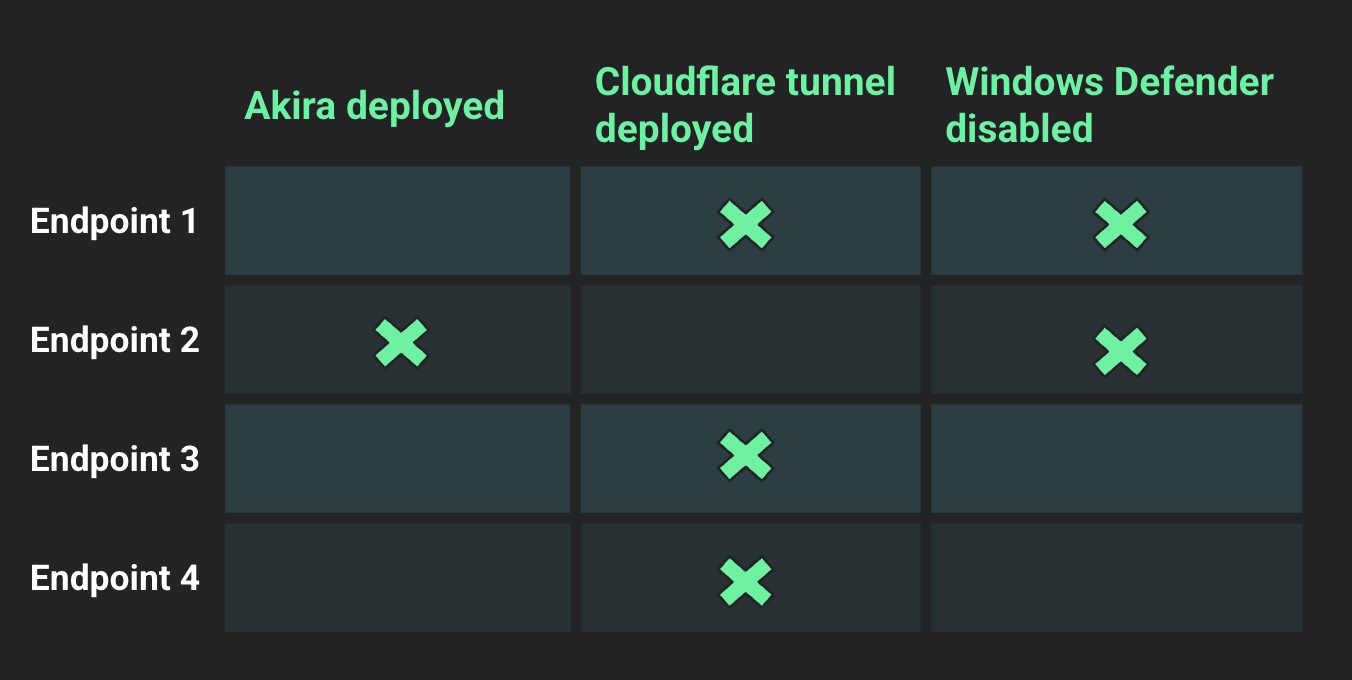

Figure 1: Variation of malicious actions across four endpoints

This disparity of activity across impacted endpoints reinforces that the Huntress agent was deployed mid-compromise, while the threat actor was in the process of spreading out across the MSP’s customer base. Thanks to the lightning-fast response by the SOC, Tactical Response, and Support teams, Huntress was able to obviate the threat actor reaching further into the MSP’s customer base, severely limiting their impact.

Endpoint 1

As seen above, on “Endpoint 1,” threat actors were not able to deploy the Akira ransomware successfully—MAV caught and quarantined the ransomware attempt. Closer inspection of the Windows Event Logs showed a Cloudflare tunnel being created and run on June 23, as seen in the following System Event Log record: 

Service Control Manager/7045C:\Windows\system32\cloudflared.exe tunnel run --token [REDACTED]

The Windows service or “autorun” detected by the Huntress platform is illustrated in Figure 2.


Figure 2: Threat actors set up a Cloudflare tunnel before attempting to deploy ransomware

An account named bck was created shortly thereafter; then, on June 24 at 08:06 UTC the bck account accessed the endpoint, apparently via Remote Desktop Protocol (RDP), as seen in the following progression of Windows Event Log entries:

Microsoft-Windows-Security-Auditing/4624
Microsoft-Windows-TerminalServices-RemoteConnectionManager/1149
Microsoft-Windows-TerminalServices-LocalSessionManager/40
Microsoft-Windows-TerminalServices-LocalSessionManager/25

Notably, these log entries all included the source IP address 127.0.0.1 (localhost), which is a telltale sign that an RMM or some other means of remote access (besides RDP specifically) was used. The workstation name from which the authentication had originated had also been observed during the previous incident highlighted in our previous blog.

At 08:23 UTC, Windows Defender then detected and blocked an attempt to deploy Akira. At 08:24 UTC, a Microsoft-Windows-Windows Defender/5001 message indicated that Windows Defender Real-Time Protection (RTP) had been disabled. Then, about 35 minutes later, the bck account started running advanced_port_scanner.exe in order to map the network.

Endpoint 2

For this endpoint, Atera activity logs provided by the customer illustrated a connection to the endpoint, and the Security Event Log retrieved from the endpoint demonstrated the adm1 account was created. Logs further illustrated that the following day, the adm1 account was used to access the endpoint via RDP from another customer endpoint, one to which the Huntress agent had not been deployed. Shortly after the login, Windows Defender Event Log messages indicated that the ransomware executable, C:\ProgramData\akira.ex_, was detected and successfully quarantined. 
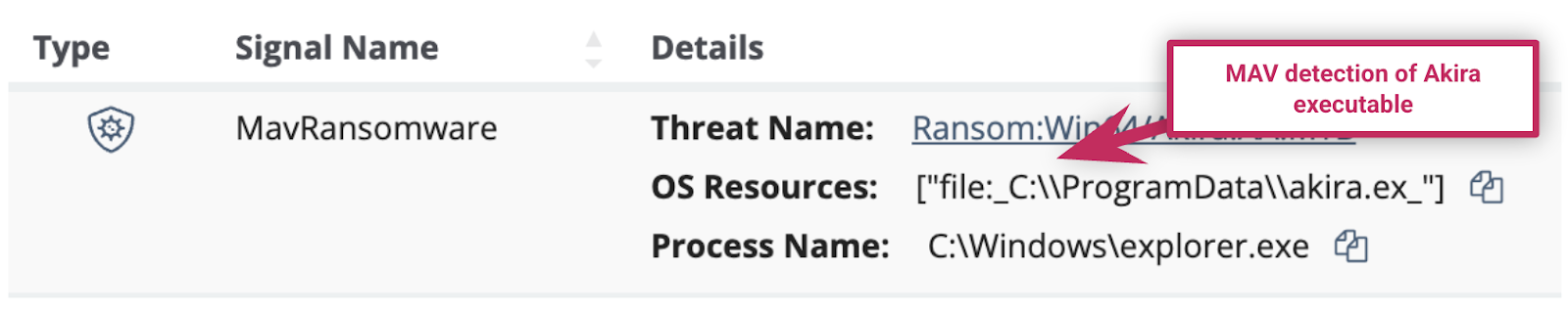

Figure 3: MAV detection of the Akira ransomware executable

Six seconds later, Windows Defender RTP was disabled, and the following PowerShell code was visible in Windows Event Logs, indicating the successful launch of the Akira ransomware executable:

powershell.exe -Command Get-WmiObject Win32_Shadowcopy , Remove-WmiObject

This was immediately followed by numerous Microsoft-Windows-RestartManager event records, which have been associated with the successful launch of the Akira ransomware executable. 

Endpoint 3

Activity on this endpoint began on June 23 with a connection via the Atera RMM, illustrated in Atera activity logs provided by the customer. This was followed by a user account password being changed. Less than a minute later, Cloudflare was installed, and two and a half hours after the installation was complete, the modified user account was used to log into the endpoint briefly via RDP over the Cloudflare tunnel, apparently to test the connection. No other activity was observed on this endpoint.

Endpoint 4

Similar to the third endpoint, activity on this endpoint began with a connection via Atera; in this instance, Cloudflare was installed and then a user account password was changed. Then, about two hours and 10 minutes later, there was a brief connection via the Cloudflare tunnel, again, apparently to check the connection. No other activity was observed on this endpoint. 


Similarities with previous MSP RMM incident 

As we saw with the incident addressed in the first part of this blog series, the initial access vector for this more recent incident was determined to be the MSP’s Atera RMM instances. 

However, there were some differences. For the previous incident outlined in our first part, we were able to rely on EDR telemetry to clearly illustrate the threat actor access to endpoints via the RMM (as seen in Figure 4 below).

For the attack addressed in this blog post, the Huntress agent was deployed mid-incident; as a result, artifacts such as encrypted canary files or EDR telemetry were not available. Instead, when we pieced the incident together, we relied solely on log files retrieved from the endpoints. In this incident, the MSP was also able to provide log data demonstrating access to their Atera RMM instance, and Huntress analysts were able to correlate this data with log data tasked from the endpoints.
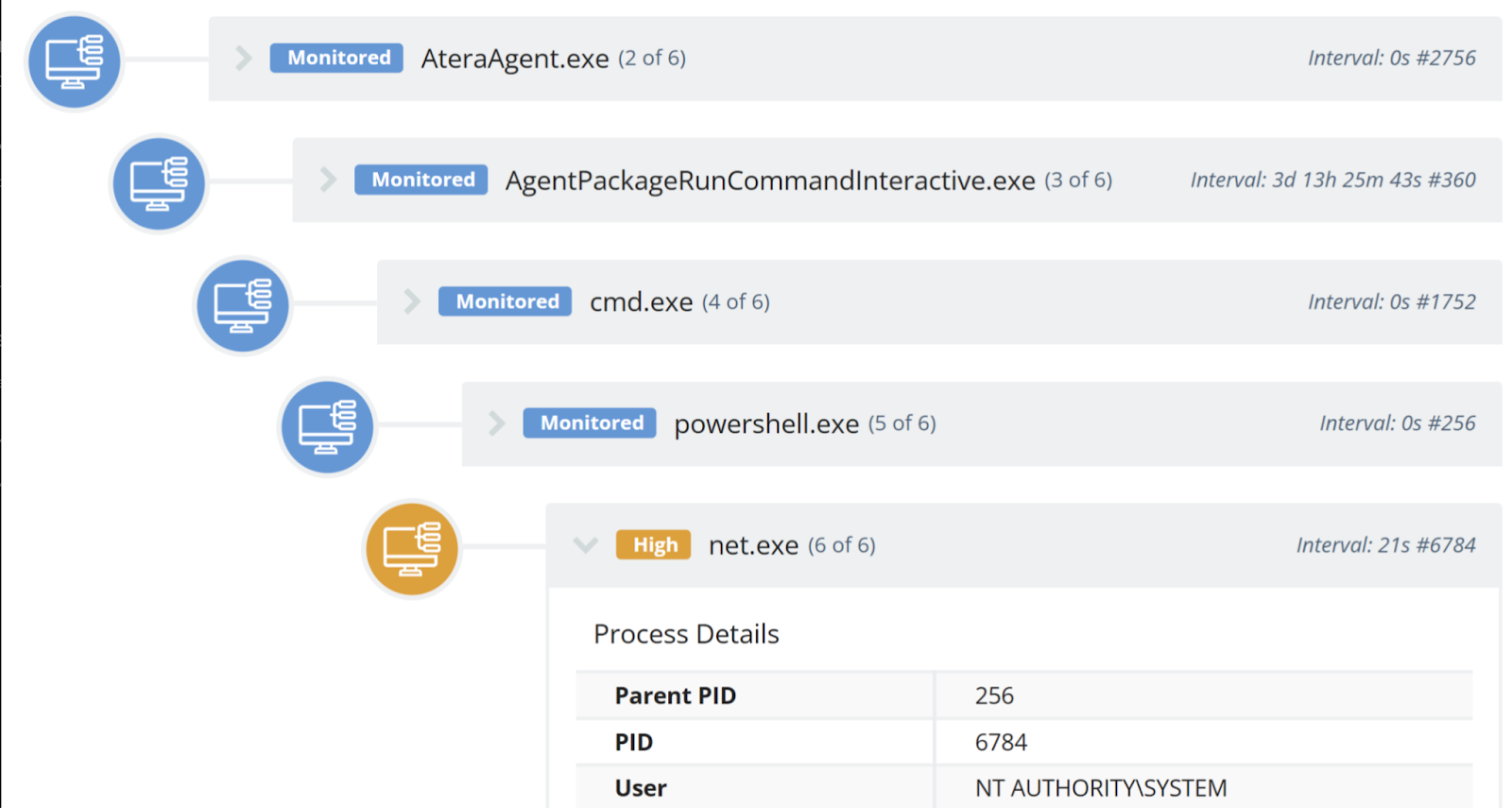


Figure 4: A process tree from the incident outlined in our previous blog showing the execution of net.exe via the Atera RMM

In the more recent incident, “toolmarks” left in the Windows Event Logs on the impacted endpoints provided a clear view of the threat actor’s activities. These included service installation events for Cloudflare tunnels, PowerShell artifacts, Windows Defender detections, and evidence of the application being disabled, as well as “toolmarks” associated with the successful launch of the Akira ransomware executable.

Cloudflare tunnel token account tags and threat actor workstation names were common factors across both incidents, demonstrating extremely similar sets of tactics, techniques, and procedures (TTPs) alongside identical indicators of compromise (IOCs). 


A third attack identified

During the first week of July, the Huntress SOC began reporting a third attack where, again, the partner Atera RMM instance was identified as the source of the activity detected across multiple customer endpoints. This third attack was identical to the previous incidents in the following ways:

  • Process lineage (i.e., Atera used to access endpoints, install Cloudflare tunnels, etc.) 
  • The Cloudflare tunnel token account ID
  • Workstation names 
  • The password used when modifying user accounts 

On one endpoint, Windows Defender was disabled after initially detecting and quarantining the Akira executable, which was successfully launched a short time later. Then, a regularly scheduled Windows Defender Quick Scan detected and quarantined the executable a second time. 

Figure 5 illustrates the process lineage observed during this incident, which is identical to what was observed during the first incident (highlighted in Figure 4).
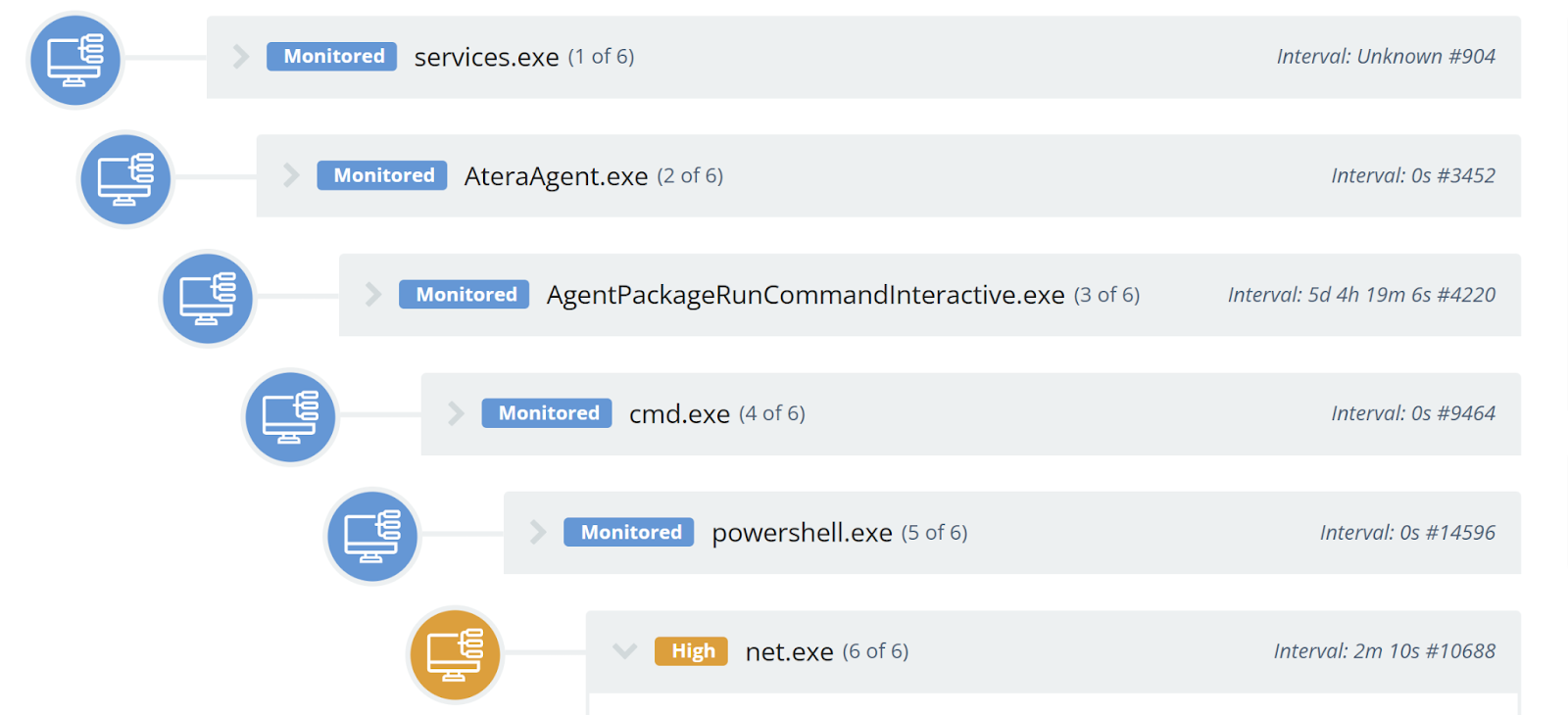

Figure 5: Process lineage for the third attack

The Huntress SOC promptly responded after the installation of the Cloudflare tunnels and Windows Defender’s detection of initial attempts to deploy Akira ransomware. The SOC isolated endpoints and notified the MSP of the Atera RMM starting point, interrupting the threat actor’s efforts and obviating the remaining attack.


MSP RMM attacks continue 

Due to the widespread impact that these types of incidents can incur, threat actors will continue to target MSPs to hit their customers. As we outlined in our previous post, MSPs can take several measures to secure their RMM tools and the RMM instances installed in customer environments. These steps include creating application controls that cover RMMs, reviewing logs for instances where RMMs were executed, and auditing remote access tools to keep tabs on potentially unauthorized instances.

Want to learn more about threat actor tradecraft like RMM abuse? Join our team each month for Tradecraft Tuesday, where we dissect hacker techniques, talk tech, and more.


Categories
Threat Analysis
Summarize this postClose Speech Bubble
ChatGPTClaudePerplexityGoogle AI

Tune in to Tradecraft Tuesday

Join us every month for Tradecraft Tuesday, our live webinar where we expose hacker techniques and talk nerdy with live demos.
Secure your spot now.
Share
Facebook iconTwitter X iconLinkedin iconDownload icon
Glitch effect

You Might Also Like

  • RMMs: A Gateway for Bulk Attacks on MSP Customers, Pt. I

    Four years after the Kaseya supply chain attack, a recent incident shows how threat actors still successfully target MSPs’ downstream customers through RMM software.
  • Velociraptor Misuse, Pt. II: The Eye of the Storm

    Huntress reports an uptick in threat actors abusing the Velociraptor open-source DFIR tool, linked to incidents involving WSUS exploitation, VS Code tunnels, and more.
  • Tales of Too Many RMMs

    In a highly interconnected world, remote monitoring and management (RMM) tools are critical to reducing cost and increasing efficiencies. However, these tools pose challenges and even significant risk if not properly managed.
  • Akira Ransomware Indicators

    Tracking various indicators associated with different attacks, Huntress analysts have been able to identify specific indicators (threat actor workstation names, passwords associated with new user account creation or current account modification, CloudFlare tunnel tokens) that are associated with Akira ransomware infections. By detecting these indicators much earlier in the attack chain, organizations can inhibit or even obviate file encryption malware deployment.
  • How a Proactive Account Review Uncovered Unauthorized Surveillance Tools

    A routine account review revealed the use of productivity monitoring tools in a medical clinic, highlighting the hidden risks associated with employee monitoring software. Learn the importance of proactive audits in protecting critical systems and sensitive data from potential threats.
  • Someone Else’s SIEM: A Threat Actor Abuses Another Free Trial

    A deep dive into a threat actor who exploited SolarWinds Web Help Desk, abused an Elastic Cloud SIEM free trial for exfiltration and triage, revealing key infrastructure.
  • Threat Intel Accelerates Detection & Response

    Evidence of a pre-existing exploit was rendered when the Huntress agent was added to an endpoint. Within minutes, and in part through the use of previously published threat intelligence, analysts were able to identify the issue and make recommendations to the customer to remediate the root cause.
  • Credential Theft: Expanding Your Reach, Pt. II

    As with many tactics within the MITRE ATT&CK framework, credential theft consists of a number of different techniques. Showing what many of them look like on an endpoint helps other security professionals understand what to look for and how to detect and respond to similar activity.

Sign Up for Huntress Updates

Get insider access to Huntress tradecraft, killer events, and the freshest blog updates.
Privacy • Terms
By submitting this form, you accept our Terms of Service & Privacy Policy
Thank you! Your submission has been received!
Oops! Something went wrong while submitting the form.
Huntress Managed Security PlatformManaged EDRManaged EDR for macOSManaged EDR for LinuxManaged ITDRManaged SIEMManaged Security Awareness TrainingManaged ISPMManaged ESPMBook a Demo
PhishingComplianceBusiness Email CompromiseEducationFinanceHealthcareManufacturingState & Local Government
Managed Service ProvidersResellersIT & Security Teams24/7 SOCCase Studies
BlogResource CenterCybersecurity 101Upcoming EventsSupport Documentation
Our CompanyLeadershipNews & PressCareersContact Us
Huntress white logo

Protecting 215k+ customers like you with enterprise-grade protection.

Privacy PolicyCookie PolicyTerms of UseCookie Consent
Linkedin iconTwitter X iconYouTube iconInstagram icon
© 2025 Huntress All Rights Reserved.

Join the Hunt

Get insider access to Huntress tradecraft, killer events, and the freshest blog updates.

By submitting this form, you accept our Terms of Service & Privacy Policy