


Don’t let overlooked obligations become incidents. Learn how.
Utility navigation bar redirect icon
Portal LoginSupportContact
Search
Close search
Huntress Logo in Teal
  • Platform Overview
    Managed EDR

    Get full endpoint visibility, detection, and response.

    Managed EDR

    Get full endpoint visibility, detection, and response.

    Managed ITDR

    Protect your Microsoft 365 identities and email environments.

    Managed ITDR

    Protect your Microsoft 365 identities and email environments.

    Managed SIEM

    Managed threat response and robust compliance support at a predictable price.

    Managed SIEM

    Managed threat response and robust compliance support at a predictable price.

    Managed Security Awareness Training

    Empower your teams with science-backed security awareness training.

    Managed Security Awareness Training

    Empower your teams with science-backed security awareness training.

    Managed ISPM

    Continuous Microsoft 365 and identity hardening, managed and enforced by Huntress experts.

    Managed ISPM

    Continuous Microsoft 365 and identity hardening, managed and enforced by Huntress experts.

    Managed ESPM

    Proactively secure endpoints against attacks.

    Managed ESPM

    Proactively secure endpoints against attacks.

    Integrations
    Integrations
    Support Documentation
    Support Documentation
    See Huntress in Action

    Quickly deploy and manage real-time protection for endpoints, email, and employees - all from a single dashboard.

    Huntress Cybersecurity
    See Huntress in Action

    Quickly deploy and manage real-time protection for endpoints, email, and employees - all from a single dashboard.

    Huntress Cybersecurity
  • Threats We Stop
    Phishing
    Phishing
    Business Email Compromise
    Business Email Compromise
    Ransomware
    Ransomware
    Infostealers
    Infostealers
    View Allright arrowView Allright arrow
    Industries We Serve
    Education
    Education
    Financial Services
    Financial Services
    State and Local Government
    State and Local Government
    Healthcare
    Healthcare
    Law Firms
    Law Firms
    Manufacturing
    Manufacturing
    Utilities
    Utilities
    View Allright arrowView Allright arrow
    Tailored Solutions
    MSPs
    MSPs
    Resellers
    Resellers
    SMBs
    SMBs
    Compliance
    Compliance
    What Gets Overlooked Gets Exploited

    Most days, nothing happens. But one day, something will.

    Huntress Cybersecurity
    Cybercriminals Have Evolved

    Get the intel on today’s cybercriminal groups and learn how to protect yourself.

    Huntress Cybersecurity
  • Pricing
  • Community Series
    The Product Lab

    Shape the next big thing in cybersecurity together.

    The Product Lab

    Shape the next big thing in cybersecurity together.

    Fireside Chat

    Real people. Real perspectives. Better conversations.

    Fireside Chat

    Real people. Real perspectives. Better conversations.

    Tradecraft Tuesday

    No products, no pitches – just tradecraft.

    Tradecraft Tuesday

    No products, no pitches – just tradecraft.

    _declassified

    Exposing hidden truths in the world of cybersecurity.

    _declassified

    Exposing hidden truths in the world of cybersecurity.

    Resources
    Upcoming Events
    Upcoming Events
    Ebooks
    Ebooks
    On-Demand Webinars
    On-Demand Webinars
    Videos
    Videos
    Whitepapers
    Whitepapers
    Datasheets
    Datasheets
    Cybersecurity Education
    Cybersecurity 101
    Cybersecurity 101
    Cybersecurity Guides
    Cybersecurity Guides
    Threat Library
    Threat Library
    Real Tradecraft, Real Results
    Real Tradecraft, Real Results
    2026 Cyber Threat Report
    2026 Cyber Threat Report
    The Huntress Blog
    Huntress Lands on the Microsoft Marketplace
    Huntress Cybersecurity
    Huntress Lands on the Microsoft Marketplace
    Huntress Cybersecurity
    How Huntress & DEFCERT Are Streamlining CMMC Assessment Prep
    Huntress Cybersecurity
    How Huntress & DEFCERT Are Streamlining CMMC Assessment Prep
    Huntress Cybersecurity
    Live Hacking Into Microsoft 365 with Kyle Hanslovan
    Huntress Cybersecurity
    Live Hacking Into Microsoft 365 with Kyle Hanslovan
    Huntress Cybersecurity
  • Why Huntress

    Go beyond AI in the fight against today’s hackers with Huntress Managed EDR purpose-built for your needs

    Huntress Cybersecurity
    Why Huntress

    Go beyond AI in the fight against today’s hackers with Huntress Managed EDR purpose-built for your needs

    Huntress Cybersecurity
    The Huntress SOC

    24/7 Security Operations Center

    The Huntress SOC

    24/7 Security Operations Center

    Reviews

    Why businesses of all sizes trust Huntress to defend their assets

    Reviews

    Why businesses of all sizes trust Huntress to defend their assets

    Case Studies

    Learn directly from our partners how Huntress has helped them

    Case Studies

    Learn directly from our partners how Huntress has helped them

    Community

    Get in touch with the Huntress Community team

    Community

    Get in touch with the Huntress Community team

    Compare Huntress
    Bitdefender
    Bitdefender
    Blackpoint
    Blackpoint
    Breach Secure Now!
    Breach Secure Now!
    Crowdstrike
    Crowdstrike
    Datto
    Datto
    SentinelOne
    SentinelOne
    Sophos
    Sophos
    Compare Allright arrowCompare Allright arrow
  • HUNTRESS HUB

    Login to access top-notch marketing resources, tools, and training.

    Huntress Cybersecurity
    HUNTRESS HUB

    Login to access top-notch marketing resources, tools, and training.

    Huntress Cybersecurity
    Partners
    MSPs

    Join our partner community to deliver expert-led managed security.

    MSPs

    Join our partner community to deliver expert-led managed security.

    Resellers

    Partner program designed to grow your cybersecurity business.

    Resellers

    Partner program designed to grow your cybersecurity business.

    Tech Alliances

    Driving innovation through global technology Partnerships

    Tech Alliances

    Driving innovation through global technology Partnerships

    Microsoft Partnership

    A Level-Up for Your Business Security

    Microsoft Partnership

    A Level-Up for Your Business Security

  • Press Release
    Huntress Announces Collaboration with Microsoft to Strengthen Cybersecurity for Businesses of All Sizes
    Huntress Cybersecurity
    Press Release
    Huntress Announces Collaboration with Microsoft to Strengthen Cybersecurity for Businesses of All Sizes
    Huntress Cybersecurity
    Our Story

    We're on a mission to shatter the barriers to enterprise-level security.

    Our Story

    We're on a mission to shatter the barriers to enterprise-level security.

    Newsroom

    Explore press releases, news articles, media interviews and more.

    Newsroom

    Explore press releases, news articles, media interviews and more.

    Meet the Team

    Founded by former NSA Cyber Operators. Backed by security researchers.

    Meet the Team

    Founded by former NSA Cyber Operators. Backed by security researchers.

    Careers

    Ready to shake up the cybersecurity world? Join the hunt.

    Careers

    Ready to shake up the cybersecurity world? Join the hunt.

    Awards
    Awards
    Contact Us
    Contact Us
  • Portal Login
  • Support
  • Contact
  • Search
  • Get a Demo
  • Start for Free
Portal LoginSupportContact
Search
Close search
Get a Demo
Start for Free
HomeBlog
For Ransomware, Time (to Ransom) is Money
Published:
May 13, 2025

For Ransomware, Time (to Ransom) is Money

By:
Lindsey O'Donnell-Welch
Share icon
Glitch effectGlitch effectGlitch effect

Ransomware actors have one primary goal—bringing in money. But the way that they do it varies from attack to attack.

Before they actually trigger the ransomware payload, some threat actors might try to make it harder to root out their activity or kick them out. Others might take more of a “smash and grab” approach, going in armed with a solid understanding of the victim’s environment, what security tools they rely on, and more. Threat actors using that playbook move quickly, deploying the ransomware, and then pressuring the victim to make the payment.

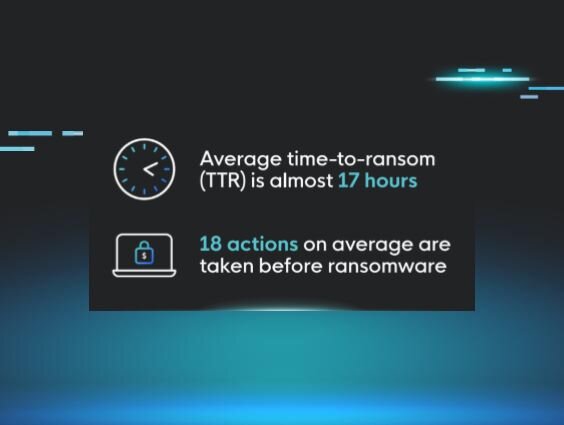
In the Huntress 2025 Cyber Threat Report, we found that the average time-to-ransom across security incidents was almost 17 hours, with ransomware groups taking an average of 18 actions before they actually triggered the ransomware payload.

For businesses, time-to-ransom metrics show the urgency of ransomware attacks once threat actors get into their systems. Some of the attackers had a time-to-ransom average of just over four hours after gaining initial access, so every minute counts for businesses in how they strategize and prepare for these types of attacks.


Figure 1: Chart of top activities prior to ransomware


What time-to-ransom tells us about ransomware groups

Why is time-to-ransom important to track? Let’s take a step back and look at what this metric actually tells us.

Time-to-ransom is measured in the average number of hours it takes for attackers to move from initial access to the actual deployment of ransomware. We saw faster deployment times from some threat actors, including Play, Akira, and Dharma/Crysis, and longer times from others, including (ironically) Rapid, Sodinokibi, and Phobos.


"How Ransomware Groups Plan & Execute Attacks" featuring Huntress' Greg Linares

Another metric that we studied was linked to the actual malicious activities that threat actors carried out in a 48-hour window before triggering the ransomware, like commands that supported privilege escalation or lateral movement. Ransomware actors like Phobos and Maze carried out more than 30 actions on average before deploying ransomware. At the other end of the spectrum, Conti, Play, and Black Basta carried out fewer than 10 actions, on average.

Many times, these differences can be explained by threat actors’ motives and how they approach attacks. Actors like Play and RansomHub, for instance, go into an environment knowing exactly what they need to do to move as quickly as possible.

But there are other considerations. Attackers that perform a higher number of malicious activities might have goals aligned with data theft or espionage. Some might try to foil any mitigation and response efforts by security teams by targeting backups, clearing logs, and disabling security tools.

Regardless of the various actions they take after achieving initial access, we found that most threat actors exfiltrated data straight before triggering the ransomware payload. With the rise of double extortion methods and public data leak sites, ransomware actors are trying to get the most of the data on victims’ systems.


Time-to-ransom: How we collected the data

To determine time-to-ransom, we looked at cases where we had investigated ransomware incidents in customer environments. We used data going back to late 2023, where we hunted through activity logs to:

  1. Identify events linked to ransomware and then find the point of initial access or first signs of observed malicious activity—whether that’s through unauthorized account access via stolen credentials or through brute force attacks on Remote Desktop (RDP)

  2. Record the average time it took for threat actors to move from that point of initial access or first detected malicious activity to the eventual deployment of ransomware

  3. Attribute the time-to-ransom to various ransomware groups based on the ransom note that threat actors delivered during the incident

It’s important to note that there are several variables that could impact time-to-ransom in any given incident. 
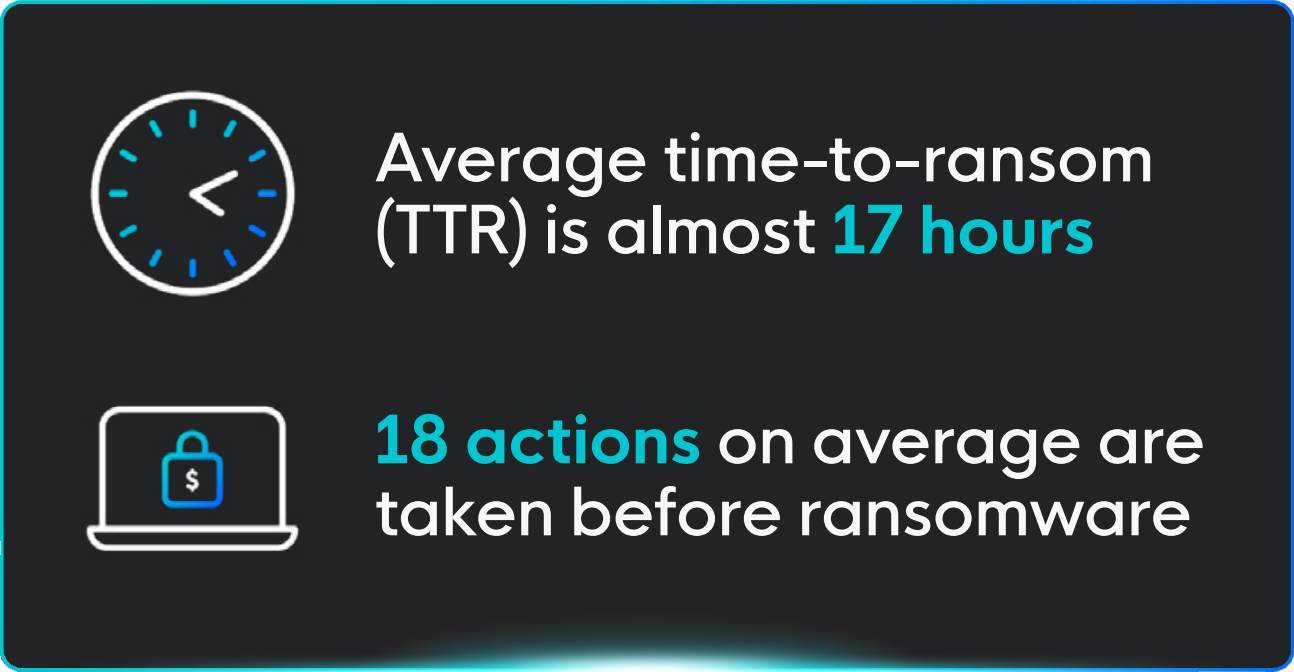
Figure 2: The average TTR and actions taken before ransomware deployment

One important variable here is Huntress’s visibility: for example, in some incidents, Huntress was installed in response to a suspected incident, or wasn’t installed on every endpoint, which could potentially limit what we could see. Other times, threat actors used defense evasion techniques, like disabling event logs, which can limit the scope of visibility into the inner workings of the attack.

Huntress also works with organizations that have smaller networks. That might impact the timeframe for ransomware incidents that we see: lateral movement, for example, looks different on a smaller network compared to how it might look on bigger enterprise networks.

No incident is alike, and differences within the attacks themselves can also impact the timing and number of malicious actions linked to an incident. The point of initial access for threat actors could impact how quickly it takes for them to accelerate the attack, for instance. Threat actors that gain initial access via compromised credentials for an account with lower-level privileges may need to take additional steps—say, targeting a heap-based buffer overflow that may be exploitable by local users—to elevate privileges. On the other hand, if threat actors gain access to an administrator account, they’ll be armed with these privileges from the start and ready to hit the ground running.


A tale of two incidents

Let’s look at two separate incidents, and how time-to-ransom played out across those attacks. 

Last year, we responded to an INC ransomware attack on an entity in the healthcare sector. Here, the first evidence that something was amiss was on December 22, when an attacker-controlled workstation had access to an account for over nine minutes. Six days later, on December 28, an admin account was seen moving fast, dumping credentials, and encrypting endpoints.

During the longer time-to-ransom journey in this incident, here are some of the things that the threat actor focused on between initial access and ransomware deploymen

  • Dumping credentials stored in the process memory of the Local Security Authority Subsystem Service (LSASS): Here, the threat actor sought to dump LSASS credentials via the ProcDump command-line utility (“C:\ Windows\Temp\Procdump\procdump.exe”)

  • Attempting to shut down security tools to avoid detection: The threat actor tried to disable Microsoft Defender after it blocked the initial attempt to deploy the ransomware executable.
Figure 3: Signals showing credential dumping with ProcDump

Now, let’s look at another incident, which occurred in the same month (December 2024), but this time with a quicker time-to-ransom frame. In this incident, the threat actor targeted a technology company and deployed the Akira ransomware. 

The first inklings of activity linked to the threat actor was from a legitimate account with stolen credentials, from a known, attacker-controlled workstation on December 12. The next day, the attacker performed a number of activities in rapid succession before deploying the ransomware, including:

  • Lateral movement: The threat actor used WMI to modify the registry and facilitate lateral movement across RDP.
  • Alternate authentication: The threat actor ran a PowerShell command to disable Restricted Admin mode on RDP, which is a mode allowing users to log into remote host servers without transmitting their credentials to the server. When this mode is disabled, it could be indicative of a pass-the-hash attack, where threat actors steal hashed versions of user credentials and use them to make new sessions on the same network.

As mentioned above, one important variable in measuring time-to-ransom is Huntress’ positioning around and insight into the incident. In both of these cases, Huntress was alerted by certain signals, like a triggered ransomware canary indicating that data has been encrypted on a machine, or suspicious arguments via WMI that could indicate lateral movement. 

While these gave us an understanding of where the ransomware actor was at that point in time during the attack, a retrospective, closer look at security event logs gave us the breadcrumbs to the point of initial access. In cases like these, having security information and event management (SIEM) in place could give organizations a more proactive way to recognize threats before they cascade.


Why should we care about time-to-ransom?

For businesses, looking at the actions that threat actors perform—and the time spent performing them—before triggering ransomware can give a rough idea of the opportunities they have for detection in an attack before ransomware is deployed, and how much time they may have to respond to ransomware attacks overall.

There's a stark discrepancy when comparing time-to-ransom averages to the timeline for businesses responding to an attack. A 2024 Statista report found that the average length of interruption after ransomware attacks at US businesses was 24 days. That means an hours-long attack could lead to a weeks-long disruption on a victim’s end.

As we’ve laid out above, many ransomware actors rely on tried-and-true methods for their attacks, and businesses need to be prepared. Here are some ways to be proactive:

  • Keep offline, encrypted backups for critical data, and test those backups in disaster recovery scenarios

  • Create an incident response playbook, which is reviewed and understood across the chain of command in your business, and that clearly lays out: 

    • Who handles what across the immediate remediation, containment, and recovery phases

    • How data breach notification procedures and potential compliance issues will be handled

    • How details and updates will be communicated, both within the organization and with the public


Categories
Cybersecurity Education
Summarize this postClose Speech Bubble
ChatGPTClaudePerplexityGoogle AI

See Huntress in action

Our platform combines a suite of powerful managed detection and response tools for endpoints and Microsoft 365 identities, science-backed security awareness training, and the expertise of our 24/7 Security Operations Center (SOC).

Book a Demo
Share
Facebook iconTwitter X iconLinkedin iconDownload icon
Glitch effect

You Might Also Like

  • Breaking Down Ransomware Attacks and How to Stay Ahead

    Break down how a ransomware attack works. Why ransomware is on the side, and how Huntress helps you stay protected.
  • ReadText34 Ransomware Incident

    Huntress analysts see a number of attacks on a daily and weekly basis, some of which include ransomware attacks. Now and again, Huntress analysts will observe a ransomware attack that stands out in some novel manner.
  • Time to Act: Gaining the Edge with Huntress Response Capabilities

    Discover how Huntress MDR can respond swiftly to cyber threats and give you the critical time advantage in your ongoing battle against attackers.
  • Getting to the Crux (Ransomware) of the Matter

    Huntress has observed a new ransomware variant, Crux, being used in multiple incidents.
  • Dispelling Ransomware Deployment Myths

    Huntress analyzes ransomware activity, uncovering attack patterns and key detection opportunities while dispelling ransomware myths.
  • Average Cost of a Data Breach

    Learn what the average cost of a data breach is and how factors like industry and location impact it. Plus, learn how to protect yourself from costly breaches.
  • How Huntress Achieved a Blazing Fast MTTR (and Why It Matters)

    The Huntress SOC has an average response time of 8 minutes. That means we can investigate threats, send incident reports, and resolve alerts in record time, shutting down attackers before they have a chance to act.
  • Auto-Remediations: Save Precious Time on Low-Level Incidents

    Learn about Huntress' latest feature, Auto-Remediations for Low-severity Incidents, which can help save time by instantly remediating low-severity threats.

Sign Up for Huntress Updates

Get insider access to Huntress tradecraft, killer events, and the freshest blog updates.
Privacy • Terms
By submitting this form, you accept our Terms of Service & Privacy Policy
Thank you! Your submission has been received!
Oops! Something went wrong while submitting the form.
Huntress Managed Security PlatformManaged EDRManaged EDR for macOSManaged EDR for LinuxManaged ITDRManaged SIEMManaged Security Awareness TrainingManaged ISPMManaged ESPMBook a Demo
PhishingComplianceBusiness Email CompromiseEducationFinanceHealthcareManufacturingState & Local Government
Managed Service ProvidersResellersIT & Security Teams24/7 SOCCase Studies
BlogResource CenterCybersecurity 101Upcoming EventsSupport Documentation
Our CompanyLeadershipNews & PressCareersContact Us
Huntress white logo

Protecting 215k+ customers like you with enterprise-grade protection.

Privacy PolicyCookie PolicyTerms of UseCookie Consent
Linkedin iconTwitter X iconYouTube iconInstagram icon
© 2025 Huntress All Rights Reserved.

Join the Hunt

Get insider access to Huntress tradecraft, killer events, and the freshest blog updates.

By submitting this form, you accept our Terms of Service & Privacy Policy