




Don’t let overlooked obligations become incidents. Learn how.
Utility navigation bar redirect icon
Portal LoginSupportContact
Search
Close search
Huntress Logo in Teal
  • Platform Overview
    Managed EDR

    Get full endpoint visibility, detection, and response.

    Managed EDR

    Get full endpoint visibility, detection, and response.

    Managed ITDR

    Protect your Microsoft 365 identities and email environments.

    Managed ITDR

    Protect your Microsoft 365 identities and email environments.

    Managed SIEM

    Managed threat response and robust compliance support at a predictable price.

    Managed SIEM

    Managed threat response and robust compliance support at a predictable price.

    Managed Security Awareness Training

    Empower your teams with science-backed security awareness training.

    Managed Security Awareness Training

    Empower your teams with science-backed security awareness training.

    Managed ISPM

    Continuous Microsoft 365 and identity hardening, managed and enforced by Huntress experts.

    Managed ISPM

    Continuous Microsoft 365 and identity hardening, managed and enforced by Huntress experts.

    Managed ESPM

    Proactively secure endpoints against attacks.

    Managed ESPM

    Proactively secure endpoints against attacks.

    Integrations
    Integrations
    Support Documentation
    Support Documentation
    See Huntress in Action

    Quickly deploy and manage real-time protection for endpoints, email, and employees - all from a single dashboard.

    Huntress Cybersecurity
    See Huntress in Action

    Quickly deploy and manage real-time protection for endpoints, email, and employees - all from a single dashboard.

    Huntress Cybersecurity
  • Threats We Stop
    Phishing
    Phishing
    Business Email Compromise
    Business Email Compromise
    Ransomware
    Ransomware
    Infostealers
    Infostealers
    View Allright arrowView Allright arrow
    Industries We Serve
    Education
    Education
    Financial Services
    Financial Services
    State and Local Government
    State and Local Government
    Healthcare
    Healthcare
    Law Firms
    Law Firms
    Manufacturing
    Manufacturing
    Utilities
    Utilities
    View Allright arrowView Allright arrow
    Tailored Solutions
    MSPs
    MSPs
    Resellers
    Resellers
    SMBs
    SMBs
    Compliance
    Compliance
    What Gets Overlooked Gets Exploited

    Most days, nothing happens. But one day, something will.

    Huntress Cybersecurity
    Cybercriminals Have Evolved

    Get the intel on today’s cybercriminal groups and learn how to protect yourself.

    Huntress Cybersecurity
  • Pricing
  • Community Series
    The Product Lab

    Shape the next big thing in cybersecurity together.

    The Product Lab

    Shape the next big thing in cybersecurity together.

    Fireside Chat

    Real people. Real perspectives. Better conversations.

    Fireside Chat

    Real people. Real perspectives. Better conversations.

    Tradecraft Tuesday

    No products, no pitches – just tradecraft.

    Tradecraft Tuesday

    No products, no pitches – just tradecraft.

    _declassified

    Exposing hidden truths in the world of cybersecurity.

    _declassified

    Exposing hidden truths in the world of cybersecurity.

    Resources
    Upcoming Events
    Upcoming Events
    Ebooks
    Ebooks
    On-Demand Webinars
    On-Demand Webinars
    Videos
    Videos
    Whitepapers
    Whitepapers
    Datasheets
    Datasheets
    Cybersecurity Education
    Cybersecurity 101
    Cybersecurity 101
    Cybersecurity Guides
    Cybersecurity Guides
    Threat Library
    Threat Library
    Real Tradecraft, Real Results
    Real Tradecraft, Real Results
    2026 Cyber Threat Report
    2026 Cyber Threat Report
    The Huntress Blog
    Huntress Lands on the Microsoft Marketplace
    Huntress Cybersecurity
    Huntress Lands on the Microsoft Marketplace
    Huntress Cybersecurity
    How Huntress & DEFCERT Are Streamlining CMMC Assessment Prep
    Huntress Cybersecurity
    How Huntress & DEFCERT Are Streamlining CMMC Assessment Prep
    Huntress Cybersecurity
    Live Hacking Into Microsoft 365 with Kyle Hanslovan
    Huntress Cybersecurity
    Live Hacking Into Microsoft 365 with Kyle Hanslovan
    Huntress Cybersecurity
  • Why Huntress

    Go beyond AI in the fight against today’s hackers with Huntress Managed EDR purpose-built for your needs

    Huntress Cybersecurity
    Why Huntress

    Go beyond AI in the fight against today’s hackers with Huntress Managed EDR purpose-built for your needs

    Huntress Cybersecurity
    The Huntress SOC

    24/7 Security Operations Center

    The Huntress SOC

    24/7 Security Operations Center

    Reviews

    Why businesses of all sizes trust Huntress to defend their assets

    Reviews

    Why businesses of all sizes trust Huntress to defend their assets

    Case Studies

    Learn directly from our partners how Huntress has helped them

    Case Studies

    Learn directly from our partners how Huntress has helped them

    Community

    Get in touch with the Huntress Community team

    Community

    Get in touch with the Huntress Community team

    Compare Huntress
    Bitdefender
    Bitdefender
    Blackpoint
    Blackpoint
    Breach Secure Now!
    Breach Secure Now!
    Crowdstrike
    Crowdstrike
    Datto
    Datto
    SentinelOne
    SentinelOne
    Sophos
    Sophos
    Compare Allright arrowCompare Allright arrow
  • HUNTRESS HUB

    Login to access top-notch marketing resources, tools, and training.

    Huntress Cybersecurity
    HUNTRESS HUB

    Login to access top-notch marketing resources, tools, and training.

    Huntress Cybersecurity
    Partners
    MSPs

    Join our partner community to deliver expert-led managed security.

    MSPs

    Join our partner community to deliver expert-led managed security.

    Resellers

    Partner program designed to grow your cybersecurity business.

    Resellers

    Partner program designed to grow your cybersecurity business.

    Tech Alliances

    Driving innovation through global technology Partnerships

    Tech Alliances

    Driving innovation through global technology Partnerships

    Microsoft Partnership

    A Level-Up for Your Business Security

    Microsoft Partnership

    A Level-Up for Your Business Security

  • Press Release
    Huntress Announces Collaboration with Microsoft to Strengthen Cybersecurity for Businesses of All Sizes
    Huntress Cybersecurity
    Press Release
    Huntress Announces Collaboration with Microsoft to Strengthen Cybersecurity for Businesses of All Sizes
    Huntress Cybersecurity
    Our Story

    We're on a mission to shatter the barriers to enterprise-level security.

    Our Story

    We're on a mission to shatter the barriers to enterprise-level security.

    Newsroom

    Explore press releases, news articles, media interviews and more.

    Newsroom

    Explore press releases, news articles, media interviews and more.

    Meet the Team

    Founded by former NSA Cyber Operators. Backed by security researchers.

    Meet the Team

    Founded by former NSA Cyber Operators. Backed by security researchers.

    Careers

    Ready to shake up the cybersecurity world? Join the hunt.

    Careers

    Ready to shake up the cybersecurity world? Join the hunt.

    Awards
    Awards
    Contact Us
    Contact Us
  • Portal Login
  • Support
  • Contact
  • Search
  • Get a Demo
  • Start for Free
Portal LoginSupportContact
Search
Close search
Get a Demo
Start for Free
HomeCybersecurity 101
What Is ESPM (Endpoint Security Posture Management)?

What Is ESPM (Endpoint Security Posture Management)?

Published: 11/21/2025

Updated: 03/18/2026

Written by: Lizzie Danielson

Glitch effectGlitch effect

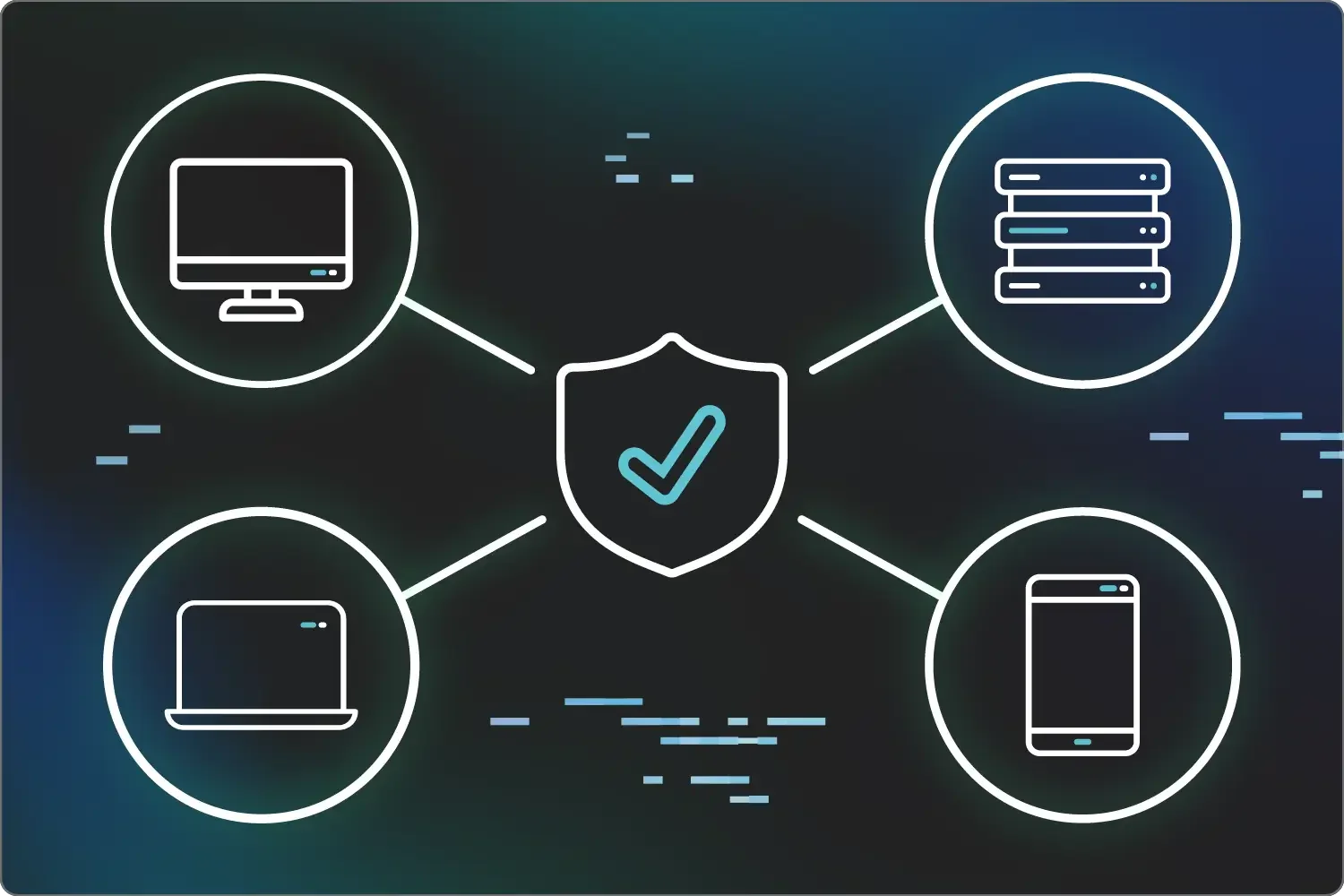
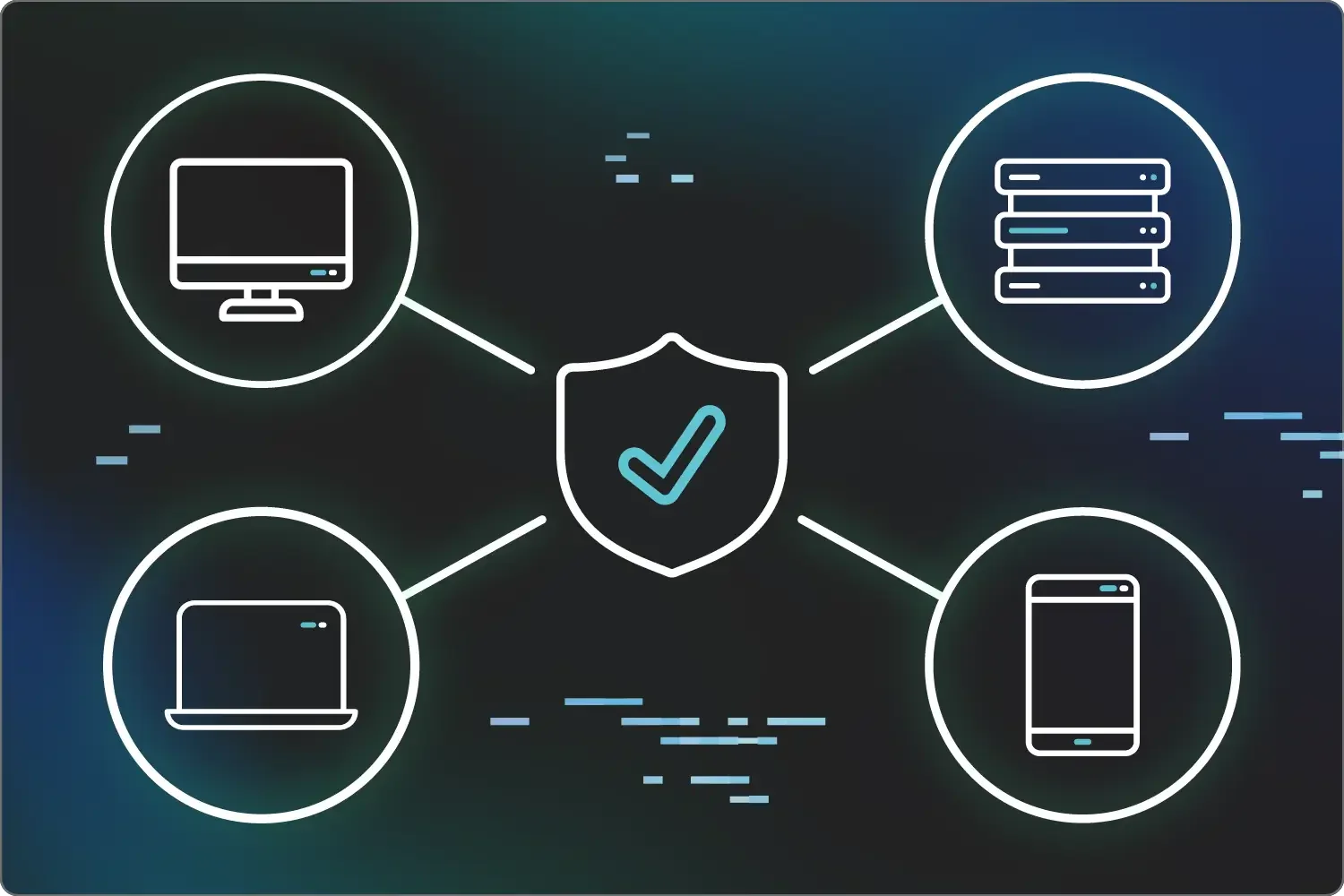
ESPM—or Endpoint Security Posture Management—is a continuous, automated audit of every device connected to your network.

Its job is to find "posture" weaknesses. Think: risky settings, missing updates, or security gaps on any laptop, server, or mobile phone.

Why care? Because endpoints are the frontline of cybersecurity. A single unpatched laptop or a misconfigured server is a wide-open invitation for an attacker to bypass your defenses and gain access to your entire network.


Key Takeaways

  • ESPM is a continuous, automated audit of every managed endpoint that replaces manual checklists and guesswork with real-time visibility into endpoint security health — identifying risks like missing patches, disabled firewalls, encryption gaps, and risky configurations before attackers can exploit them.

  • Endpoints are the frontline of cybersecurity, and device sprawl across laptops, remote desktops, cloud servers, and mobile phones makes it nearly impossible for IT teams to maintain a clear picture of their attack surface without an automated solution like ESPM.

  • ESPM is distinctly proactive, not reactive — unlike Antivirus (which blocks known malware) or EDR (which detects active threats and suspicious behavior), ESPM focuses exclusively on hardening the endpoint's configuration and state to close security gaps before a breach occurs, like knowing which applications are running on endpoints and blocking the ones that can increase an endpoint’s attack surface.

  • A complete endpoint security strategy requires all three layers — AV to catch low-hanging fruit, ESPM to proactively harden devices, and EDR to detect advanced attackers who manage to get through. ESPM is the first pillar of comprehensive endpoint security, working alongside AV and EDR. 

Why endpoint security posture management is critical for cybersecurity resilience

Device sprawl is a real problem. Your organization's data is accessed across laptops, remote workers' desktops, cloud servers, and mobile phones — many of which sit outside your direct line of sight.

This makes it nearly impossible for IT and security teams to maintain a clear, real-time picture of their attack surface. Did that remote employee actually install the latest security patch? Is the new server configured correctly? Is a user trying to install a printer driver that’s really an infostealer? Does every laptop have its firewall enabled and its antivirus running?

That uncertainty is risk. And in cybersecurity, uncertainty is exactly what attackers rely on.

ESPM cuts through that chaos. It replaces manual checklists and guesswork with 24/7 visibility  and control of your endpoint security health—giving your team the insights  needed to know exactly how your endpoint security posture is at any moment, and be able to prove it to internal stakeholders and external parties.


What does ESPM look for?

ESPM is built around finding and fixing the "unforced errors" in your security posture. It's a proactive hardening tool, not a reactive one.

An ESPM solution continuously scans your devices and compares their current state against established security best practices and benchmarks. It's designed to surface common—but dangerous—endpoint risks that often go undetected, including:

  • Missing patches: Laptops or servers are left vulnerable to known exploits because they're behind on critical software updates.

  • Security tool gaps: Workstations where the antivirus is disabled, the EDR agent has gone offline, or the host firewall has been turned off.

  • Risky configurations: ESPM also enforces practical application control, preventing unapproved or risky applications from running on endpoints in the first place

  • Encryption gaps: Mobile phones or laptops with access to company data that don't have disk encryption enabled.

  • Unauthorized software: Risky or unapproved applications—like RMMs –  tools—installed on company devices without IT awareness.

Each one of these represents a real, exploitable gap in your defenses. ESPM finds them systematically, continuously, and without depending on your team to manually go looking.


How is ESPM different from EDR or Antivirus?

This is one of the most important distinctions in endpoint security—because these tools serve fundamentally different purposes. Together, they form the pillars of a complete endpoint security strategy, consistent with frameworks like theNIST Cybersecurity Framework.

Antivirus (AV): Your baseline protection. AV scans for known malware signatures—think of it as a digital "Most Wanted" list. If a file matches a known threat, it's blocked. It's reactive and signature-based, and while essential, it's not designed to catch what it doesn't already recognize.

EDR (Endpoint Detection and Response): Your active threat hunter. EDR goes beyond known bad files and watches for suspicious behavior—flagging a legitimate tool like PowerShell being used in a malicious way. EDR is built for detecting and responding to active breaches, including sophisticated attacks that slip past AV.

ESPM (Endpoint Security Posture Management): Your proactive hardener. ESPM doesn't look for active attacks or malicious files. Instead, it inspects the configuration and state of the endpoint itself—finding the unauthorized applications, missing patches, the disabled firewalls, and the bad settings before an attacker ever gets the chance to exploit them.

The key insight is this: you need all three working together. AV stops the low-hanging fruit. ESPM hardens the endpoint so attackers have less to exploit in the first place. And EDR catches the advanced attacker who manages to get in anyway.

Relying on detection and response alone—without proactively managing your endpoint posture—means you're always playing catch-up. ESPM shifts the balance in your favor.


How ESPM boosts security resilience

Cybersecurity resilience isn't just about stopping attacks—it's about reducing your attack surface so that fewer attacks succeed, and recovering faster when they do.

ESPM directly builds that resilience by:

  • Shrinking the attack surface continuously. Rather than waiting for a quarterly audit or a breach to reveal gaps, ESPM helps close exposures – like vulnerabilities and unexpected apps – in real time—before attackers have a window to act.

  • Eliminating configuration drift. Endpoints change constantly. Software gets installed, settings get changed, agents go offline. ESPM detects that drift and flags it immediately, keeping your environment aligned with security best practices.

  • Giving teams hard data, not guesswork. Security teams can prioritize remediation based on real risk exposure rather than assumptions—making every hour of effort count more.

  • Supporting compliance and audit readiness. Continuous posture visibility means you can demonstrate the security health of your environment at any time, not just when an auditor asks.

  • Removing implementation and management overhead. For organizations without large, dedicated security teams, a managed ESPM solution ensures posture hardening happens consistently—without requiring the expertise or headcount of an enterprise security operation.

The result is an environment that's fundamentally harder to attack, and a security team that's always ahead of the curve rather than reacting to the last incident.


The Strongest Foundation for Endpoint Resilience: Huntress EDR + Managed ESPM

Detection and response are essential—but it's not enough on its own. If your endpoints have misconfigured settings, disabled security tools, or unpatched vulnerabilities, you're handing attackers a head start before your EDR even has a chance to respond.

That's why Huntress pairs its enterprise-grade Managed EDR with Managed ESPM—giving you both pillars of a complete, resilient endpoint security strategy in one solution built specifically for organizations without enterprise-sized security teams or budgets.

Huntress Managed ESPM continuously audits your endpoint attack surface, finds the gaps that make breaches possible, and removes the implementation and management complexity that makes posture hardening impractical for most teams. It doesn't just provide data—it provides managed action, so your environment gets harder to attack without adding burden to your team.

Huntress Managed EDR then watches over that hardened environment 24/7, with a Security Operations Center actively hunting for the threats that still try to get through.

Together, they work as the first and second line of defense:

  • ESPM proactively closes the gaps attackers would otherwise exploit.

  • EDR actively detects and responds to the sophisticated threats that attempt to breach your defenses anyway.

Unlike complex enterprise platforms built for large security teams with deep budgets, Huntress delivers both capabilities in a managed model—purpose-built for MSPs and midmarket organizations who need real protection without the overhead.

Stop guessing about the security health of your endpoints. 



FAQs

ESPM would scan all 500 laptops in your company and instantly show you the three laptops that are missing the critical "Patch-Tuesday" update from Microsoft. This lets your IT team target those specific devices for patching before an attacker can use that known vulnerability against them.

EDR is designed to catch active attacks, but it can be noisy. ESPM helps you prevent attacks in the first place. By making sure your endpoint posture is strong (all patches applied, all firewalls on), you reduce the number of attacks that get through. Good posture makes your EDR's job easier and more effective.

They are very similar, and the terms are often used together! Think of vulnerability management as a key component of ESPM. Vulnerability management is typically focused only on finding missing patches (like CVEs). ESPM is broader—it also looks for misconfigurations, missing security tools (like AV or EDR), and encryption status.

Yes, this is another term for the same core idea. When you hear about "device health checks" or "security posture," it's all related to ESPM. The goal is to get a reliable, automated report card on the security and health of your devices.

Absolutely. In fact, they might benefit more. A small business with a tiny IT team doesn't have time to manually log into 50 different laptops to check for updates. ESPM automates that entire process, giving a stretched-thin IT team the power to see and fix all their endpoint risks in one place.

Glitch effectBlurry glitch effect
Glitch effect

Related Resources


  • What Is ISPM (Identity Security Posture Management)?
    What Is ISPM (Identity Security Posture Management)?
    What is Identity Security Posture Management (ISPM)? Learn how ISPM acts as a security checkup for user accounts, identifies hidden vulnerabilities like shadow workflows, and secures your digital perimeter.
  • What Is SaaS Security Posture Management?
    What Is SaaS Security Posture Management?
    SaaS security posture management (SSPM) monitors your cloud app settings to catch misconfigurations and security gaps before attackers do. Learn more.
  • What is an Endpoint in Cybersecurity?
    What is an Endpoint in Cybersecurity?
    Learn what endpoints are and why they matter in cybersecurity. Explore endpoint vulnerabilities, threats, and best practices for securing your devices.
  • What Is Security Posture and Why it Matters
    What Is Security Posture and Why it Matters
    Learn what security posture is, key components of a strong cybersecurity posture, and actionable steps to improve your organization’s defenses.
  • What is Elevation Control in Endpoint Management?
    What is Elevation Control in Endpoint Management?
    Learn how elevation control manages admin privileges to reduce security risks. Discover implementation strategies and benefits for endpoint management.
  • What is Asset Discovery?
    What is Asset Discovery?
    Asset discovery is the foundation of cybersecurity. Learn what it is, how it works, and why organizations need it for risk management and compliance.
  • What is an Asset in Cybersecurity?
    What is an Asset in Cybersecurity?
    Learn what constitutes a cybersecurity asset and why proper asset management is crucial for protecting your organization from cyber threats.
  • What is a Generic Device?
    What is a Generic Device?
    Learn about generic devices, how they interact with networks, and why identifying these devices is essential to improving your organization’s cybersecurity posture.
  • What is Allowlisting?
    What is Allowlisting?
    Allowlisting enhances cybersecurity by permitting only approved apps or users to access systems. Learn how it works and why it’s crucial for your security. | Huntress

Protect What Matters

Secure endpoints, email, and employees with the power of our 24/7 SOC. Try Huntress for free and deploy in minutes to start fighting threats.
Try Huntress for Free
Huntress Managed Security PlatformManaged EDRManaged EDR for macOSManaged EDR for LinuxManaged ITDRManaged SIEMManaged Security Awareness TrainingManaged ISPMManaged ESPMBook a Demo
PhishingComplianceBusiness Email CompromiseEducationFinanceHealthcareManufacturingState & Local Government
Managed Service ProvidersResellersIT & Security Teams24/7 SOCCase Studies
BlogResource CenterCybersecurity 101Upcoming EventsSupport Documentation
Our CompanyLeadershipNews & PressCareersContact Us
Huntress white logo

Protecting 215k+ customers like you with enterprise-grade protection.

Privacy PolicyCookie PolicyTerms of UseCookie Consent
Linkedin iconTwitter X iconYouTube iconInstagram icon
© 2025 Huntress All Rights Reserved.

Join the Hunt

Get insider access to Huntress tradecraft, killer events, and the freshest blog updates.

By submitting this form, you accept our Terms of Service & Privacy Policy